US Dollar - USD
- Turkish Lira - TRY
- US Dollar - USD
- Euro - EUR
- Pound sterling - GBP
- Russian Ruble - RUB
- Chinese Yuan - CNY
- Georgian lari - GEL
- Saudi Riyal - SAR
- UAE Dirham - AED
- Syrian Pound - SYP
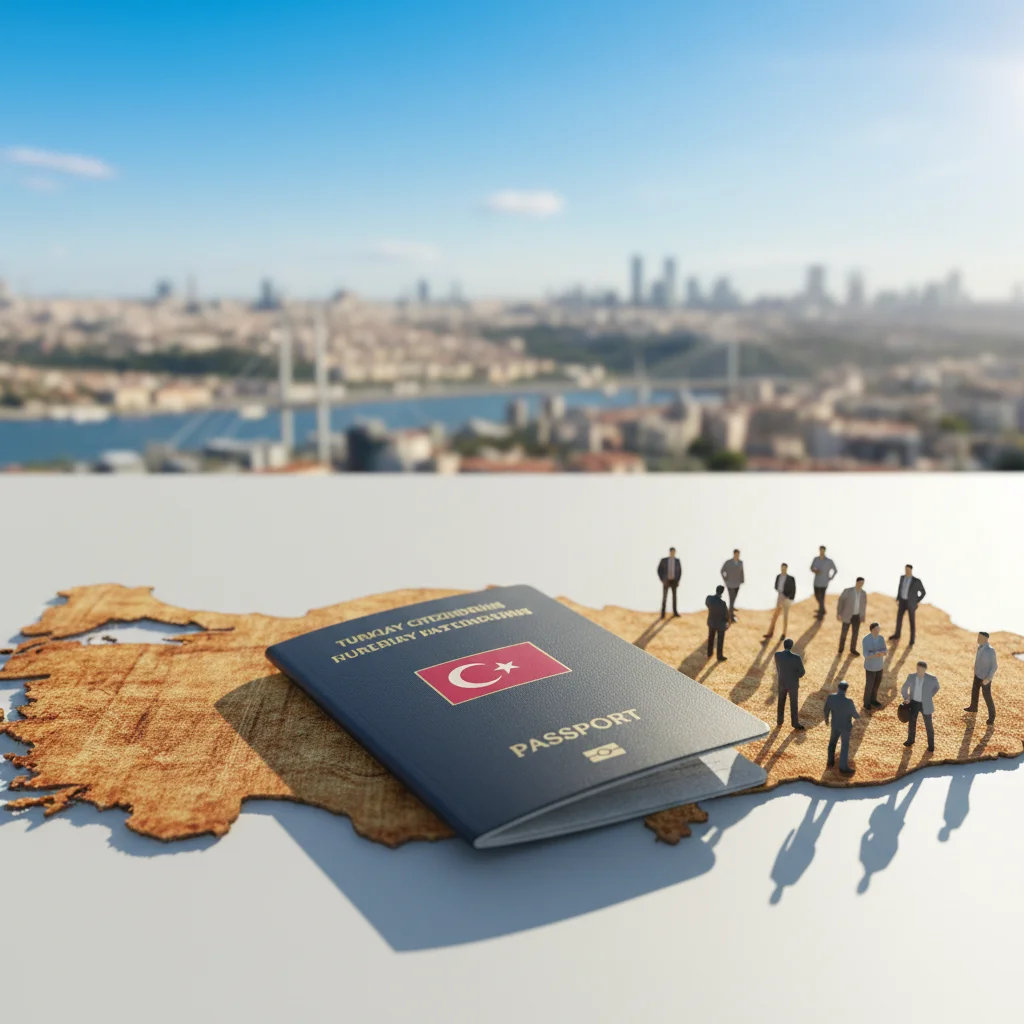
The Turkish Citizenship by Investment (CBI) program has firmly established itself as one of the most dynamic, accessible, and commercially viable economic immigration initiatives globally. Positioned at the crossroads of Europe, Asia, and the Middle East, the Republic of Turkey provides international investors with far more than a travel document. It offers a gateway to a G20 economy, access to high-yielding real estate markets, strategic commercial transit corridors, and a hedge against regional geopolitical shifts.
Over the past decade, regulatory reforms have transformed the naturalization process from an administrative labyrinth into a streamlined, institutionalized acquisition track. Governed by statutory immigration frameworks and real estate registries, foreign nationals are empowered to secure full citizenship rights for themselves and their immediate families by allocating capital into residential, commercial, or agricultural assets. However, successfully navigating the intersection of property acquisition, foreign exchange compliance, and immigration law requires deep technical diligence. This comprehensive guide details every facet of securing Turkish citizenship for foreigners through real estate and alternative investment avenues.
Turkish citizenship legislation is primarily codified under the Turkish Citizenship Law No. 5901, enacted in 2009. Article 12 of this statute grants the Presidency of the Republic of Turkey executive authority to confer citizenship by exceptional procedures to foreign nationals who meet predetermined economic thresholds.
The program underwent transformative revisions in September 2018, when the baseline real estate investment threshold was dramatically reduced from $1,000,000 to $250,000, triggering an unprecedented influx of foreign direct investment (FDI). In June 2022, responding to domestic macroeconomic shifts and surging property valuations, the Council of Ministers adjusted the statutory minimum property acquisition threshold to $400,000 (or its equivalent in foreign convertible currency). Subsequent administrative circulars issued by the General Directorate of Land Registry and Cadastre (Tapu ve Kadastro Genel Müdürlüğü - TKGM) and the Presidency of Migration Management (Göç İdaresi Başkanlığı) have introduced stringent valuation protocols, currency conversion mandates, and chain-of-title restrictions designed to safeguard market transparency.
Although real estate remains the most favored asset class due to capital appreciation and rental yield potential, the Turkish Citizenship Law provides multiple legal avenues for naturalization:
| Investment Category | Statutory Minimum Capital | Mandatory Holding Period | Regulatory Oversight Body |
|---|---|---|---|
| Real Estate Acquisition | $400,000 USD | 3 Years | Ministry of Environment, Urbanisation and Climate Change (TKGM) |
| Fixed Capital Investment | $500,000 USD | 3 Years | Ministry of Industry and Technology |
| Turkish Bank Deposit | $500,000 USD | 3 Years | Banking Regulation and Supervision Agency (BDDK) |
| Government Debt Securities | $500,000 USD | 3 Years | Ministry of Treasury and Finance |
| Real Estate/Venture Capital Funds | $500,000 USD | 3 Years | Capital Markets Board of Turkey (SPK) |
| Job Creation | 50 Full-Time Turkish Employees | 3 Years | Ministry of Labour and Social Security |
The real estate pathway requires the acquisition of one or multiple properties with a cumulative value of not less than $400,000 USD. Understanding the intricate technical requirements governing this track is paramount to avoid disqualification during the title registration phase.
Foreign buyers enjoy significant freedom in selecting property types. Eligible acquisitions encompass:
A vital regulatory amendment stipulates that the property must not have been previously used for a Turkish Citizenship by Investment application by any previous owner. Furthermore, the property must be purchased directly from a Turkish citizen or a Turkish corporate entity. If a property was sold by a foreign national to a Turkish entity and subsequently purchased by another foreigner within a three-year window, it may be deemed ineligible by TKGM auditors to prevent cyclical transaction schemes.
Looking for the best real estate investment opportunity in Istanbul?
We help you choose the right property based on your budget and goals
Get a Free Consultation
In January 2022, the Central Bank of the Republic of Turkey (TCMB) introduced a monumental change regarding foreign property transactions through the Implementation Guidelines on the Sale of Foreign Currency to the Central Bank. All foreign real estate purchases tied to citizenship must now execute a specialized foreign exchange protocol known as the Döviz Alım Belgesi (DAB).
Navigating the path to a Turkish passport involves legal, financial, and immigration procedures executed across several governmental agencies. Below is the chronological blueprint followed by seasoned legal advisors.
The investor executes a specialized Power of Attorney (POA) granting limited authority to a licensed Turkish immigration and real estate attorney. This document can be executed before a Turkish Public Notary within the country or through a Turkish Consulate or Embassy abroad. The attorney secures a Turkish Potential Tax Number (Vergi Kimlik Numarası) and initiates bank account opening protocols under the foreign national's name.
Prior to executing the property purchase, an independent valuation report must be commissioned through an appraisal firm authorized by the Capital Markets Board (SPK) and the Banking Regulation and Supervision Agency (BDDK). The appraiser conducts physical inspections, reviews zoning files, and determines the precise fair market value of the real estate. The assessed value in the official appraisal report must equal or surpass the $400,000 threshold at the prevailing TCMB exchange rate.
With the DAB generated and funds transferred to the seller, the parties convene at the local Land Registry Office (Tapu Müdürlüğü). The title deed (Tapu Senedi) is formally transferred to the investor. Concurrently, an official legal encumbrance—known as the 3-Year Non-Sale Restriction (Taahhüt/Şerh)—is registered on the property ledger. This annotation legally restricts the owner from transferring, selling, or alienating the real estate for a minimum duration of 36 months.
The Land Registry forwards the valuation report, bank receipts, DAB, and registered title deed to the Department of Foreigners at the Ministry of Environment, Urbanisation and Climate Change. The Ministry reviews the chain of title and issues the formal Certificate of Eligibility, confirming the investment meets all statutory requirements under Law No. 5901.
Unlike standard short-term touristic permits, investors are entitled to apply for a bespoke short-term residence permit under Article 31, Paragraph 1, Subparagraph (J) of Law No. 6458 on Foreigners and International Protection. This permit is issued rapidly via the Special Joint Bureau for Citizenship and does not impose minimum physical stay mandates in Turkey.
Upon issuance of the 31/J residence card, the comprehensive citizenship dossier is submitted to the Provincial Directorate of Civil Registration and Citizenship Affairs (Nüfus Müdürlüğü). The application undergoes rigorous vetting through the Ministry of Interior, the National Intelligence Organization (MİT), and Interpol. Once Presidential Approval is gazetted, the investor and eligible family members visit a local Civil Registry office or a Turkish diplomatic mission abroad to complete fingerprinting, photograph submission, and receipt of their Turkish National Identity Cards (Kimlik Kartı) and Passports.
Looking for the best real estate investment opportunity in Istanbul?
We help you choose the right property based on your budget and goals
Get a Free Consultation
Budgeting for Turkish Citizenship by Investment requires clear visibility over state taxes, statutory fees, and legal expenses associated with real estate conveyancing.
| Expense Category | Approximate Cost (USD) | Payment Recipient | Description |
|---|---|---|---|
| Core Property Investment | $400,000 (Minimum) | Property Developer / Seller | Statutory threshold for eligibility |
| Title Deed Transfer Tax (Tapu Harcı) | 2% to 4% of declared value | General Directorate of Land Registry | Statutory conveyancing tax; often split between parties or paid by buyer |
| Value Added Tax (KDV) | 1% to 20% (Exemptions apply) | Ministry of Treasury and Finance | Foreign investors can obtain complete KDV exemption under strict conditions |
| Mandatory SPK Valuation Report | $300 – $600 per unit | Authorized SPK Appraisal Firm | Standard statutory valuation assessment |
| Legal and Immigration Retainer | $3,000 – $10,000 | Licensed Law Firm / Conveyancer | End-to-end representation, due diligence, and file submission |
| Sworn Translations and Apostilles | $800 – $2,000 per family | Notary Publics and Sworn Translators | Translating birth, marriage, and civil status certificates |
| State Application and Passport Fees | $400 – $700 per person | Civil Registration Directorate (Nüfus) | Card issuance, biometric processing, and state clearance fees |
Assembling a legally sound dossier is the most critical safeguard against administrative delays. Every foreign-issued document must be authenticated either through an Apostille stamp (for signatory countries to the 1961 Hague Convention) or double-legalized via the Ministry of Foreign Affairs and the Turkish Consulate in the issuing jurisdiction.
Despite the streamlined framework, unvetted property acquisitions can result in the rejection of citizenship files or devastating capital losses. Prudent investors must be aware of several recurring pitfalls:
Unscrupulous market operators occasionally market properties at inflated asking prices while the underlying SPK appraisal evaluates the property significantly lower. If an investor pays $400,000, but the independent valuation assesses the fair market baseline at $370,000, the Ministry will instantly reject the Certificate of Eligibility. Both the contract price, bank wire receipts, and appraisal values must uniformly reach the $400,000 mark.
Investing in uncompleted developments lacking construction licenses (Yapı Ruhsatı) or condominium servitude (Kat İrtifakı) carries immense legal exposure. Properties lacking these municipal approvals cannot receive valid independent title deeds, leaving the foreign investor holding merely a promissory agreement without enforceable property rights.
Under tightening TKGM regulations, an investor cannot purchase a property from a company where foreign nationals hold shares, nor can an investor sell the property back to the original developer after the expiration of the 3-year holding term if that developer is to market the unit again for citizenship purposes. Conducting thorough corporate checks on developer shareholding structures is non-negotiable.
The requirement to maintain ownership for a minimum of 36 months presents an opportunity to implement structured property management approaches that optimize both rental yields and capital appreciation.
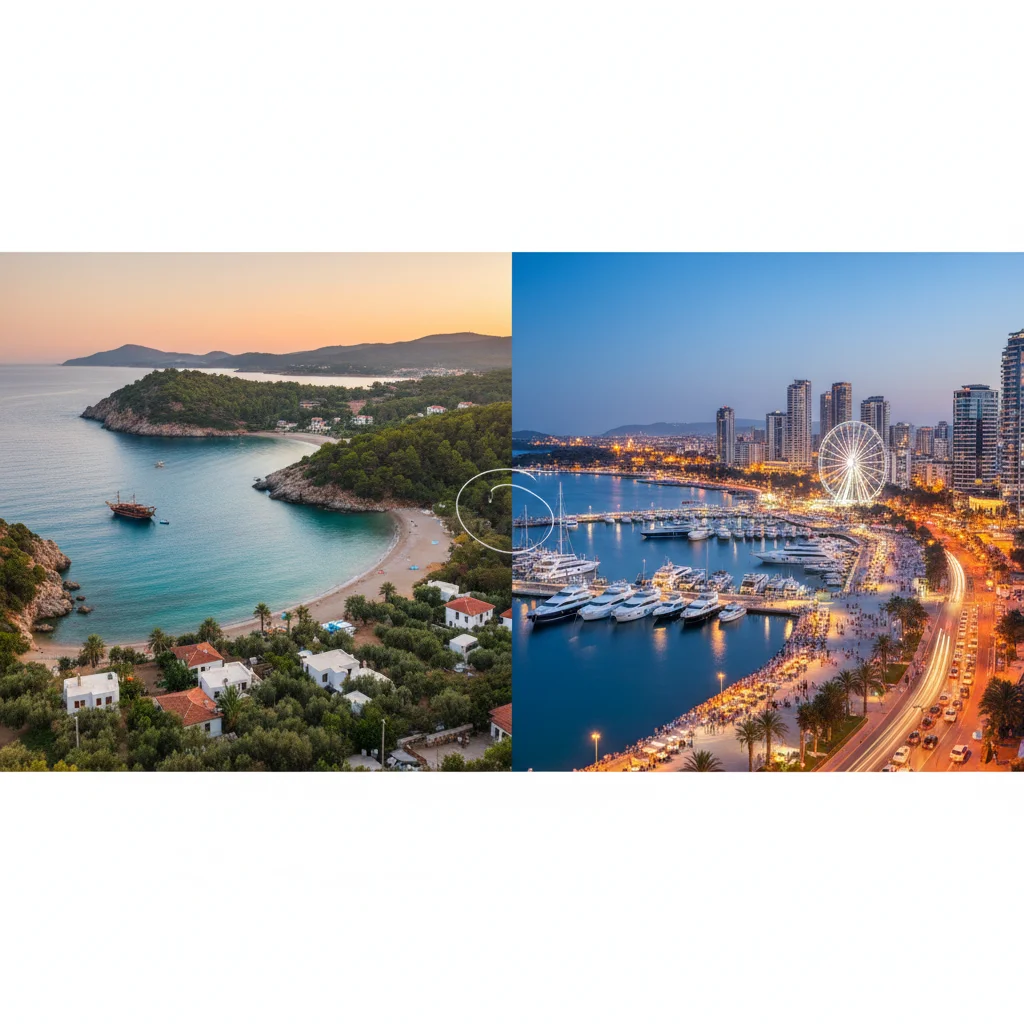
Turkey’s major urban centers—primarily Istanbul, Ankara, and Izmir—and resort markets such as Antalya and Bodrum feature distinct rental dynamics:
Upon the exact expiration of the 3-year holding period, the legal annotation on the title deed is removed upon formal application by the investor’s attorney to the Tapu office. The investor retains full, unconditional Turkish citizenship for life, regardless of whether the underlying asset is retained or sold.
Investors can divest their real estate holdings into an active domestic market driven by local population expansion, urban regeneration mandates, and continuing global migration. Repatriation of sales proceeds in foreign currency is completely unhindered by Turkish exchange controls, subject to capital gains tax provisions (gains on properties held by individuals for more than five calendar years are fully exempt from personal income tax under Article 80 of the Turkish Income Tax Law).
Beyond capital investment, acquiring Turkish citizenship unlocks significant geopolitical, personal, and financial advantages:
To contextualize the commercial value of the Turkish program, a comparative analysis against other prominent global investment migration initiatives reveals distinct advantages regarding processing velocity, physical presence, and capital recovery.
| Program | Primary Investment Requirement | Status Granted | Processing Timeline | Physical Stay Mandate |
|---|---|---|---|---|
| Turkey CBI | $400,000 Real Estate | Direct Full Citizenship | 3 to 6 Months | None |
| Greece Golden Visa | €250,000 – €800,000 Real Estate | Residency Permit Only | 6 to 12 Months | None for renewal (7 yrs for citizenship) |
| Portugal Golden Visa | €500,000 Fund Investment | Residency Permit Only | 18 to 24 Months | 7 Days per year |
| Caribbean CBI (e.g., St. Kitts) | $250,000+ Donation or Real Estate | Direct Full Citizenship | 6 to 9 Months | None |
Yes. Foreign investors can aggregate multiple real estate units (e.g., two apartments valued at $200,000 each) to fulfill the statutory minimum. The primary condition is that all title deeds must be submitted concurrently or preliminary sales agreements executed in a manner that demonstrates the collective $400,000 valuation benchmark confirmed by SPK reports and corresponding DAB documents.
No. Naturalization through the exceptional investment pathway under Article 12 of Law No. 5901 exempts applicants from Turkish language proficiency tests, employment tests, or historical examinations commonly mandated for standard residency-based naturalization tracks.
Yes. Any child born to at least one Turkish citizen parent (whether native-born or naturalized via investment) automatically acquires Turkish citizenship at birth by operation of law (Jus Sanguinis), securing multi-generational legacy security.
Selling or releasing the legal annotation prior to completing the mandatory 36-month period constitutes a direct breach of the conditions under which citizenship was granted. The Land Registry automatically alerts the General Directorate of Civil Registration and Citizenship, initiating proceedings to revoke the investor’s naturalization status.
Mortgage financing can only be utilized if the investor's down payment—excluding the loan principal—fully satisfies or exceeds the $400,000 threshold. In practice, obtaining local Turkish bank mortgages for citizenship purposes is complex due to strict equity-to-loan ratios; cash allocation backed by clean funds remains the primary method.
Acquiring Turkish citizenship for foreigners through real estate investment represents an exceptional convergence of wealth preservation, asset diversification, and global mobility. While the administrative steps are systematic, navigating the nuances of valuation accuracy, title registry encumbrances, and foreign exchange compliance demands rigorous oversight. Engaging seasoned legal counsel and established property consultants ensures that your investment not only achieves permanent nationality for your family but also stands on solid financial foundations.
Information in this comprehensive guide was sourced and compiled with insights from industry-leading advisory and property portals, including Emlak Platform, Mbany Real Estate, and Massar Istanbul.