US Dollar - USD
- Turkish Lira - TRY
- US Dollar - USD
- Euro - EUR
- Pound sterling - GBP
- Russian Ruble - RUB
- Chinese Yuan - CNY
- Georgian lari - GEL
- Saudi Riyal - SAR
- UAE Dirham - AED
- Syrian Pound - SYP
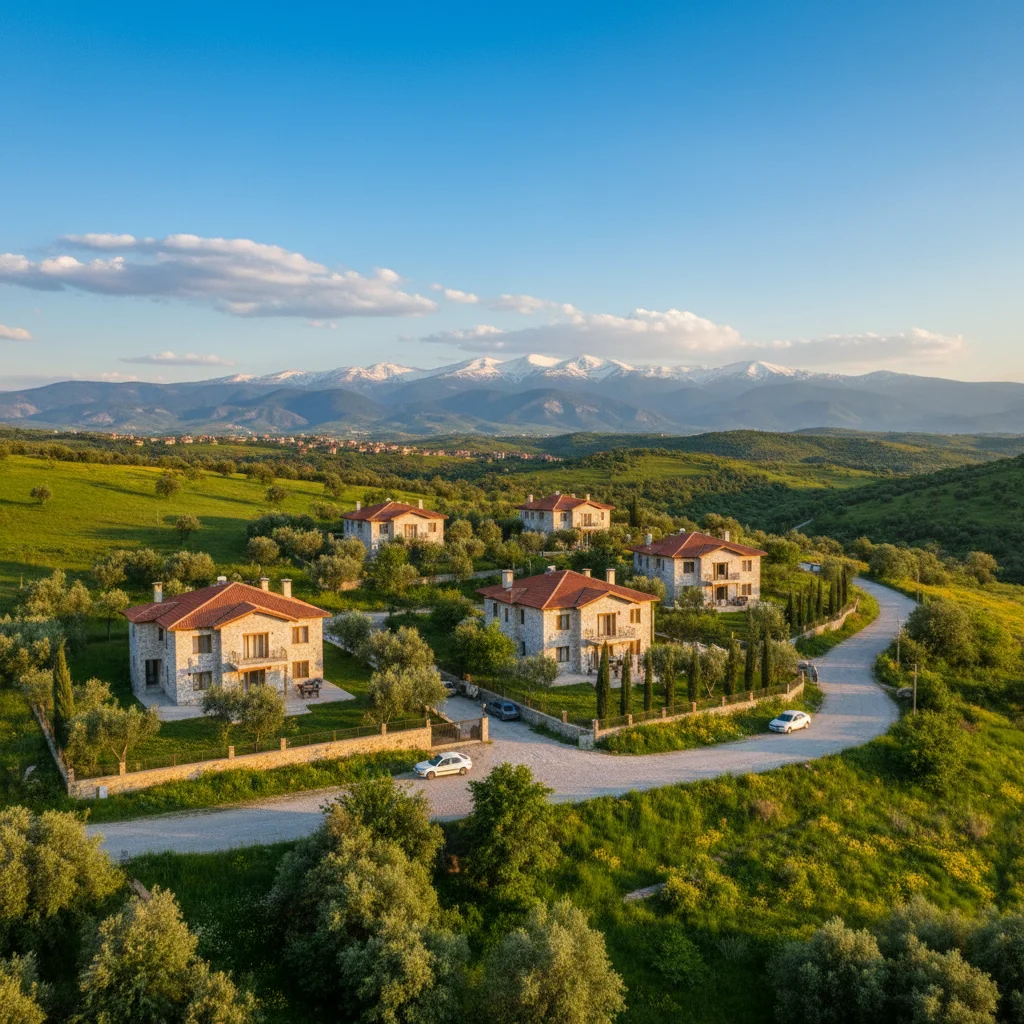
If you have spent any time browsing Turkish real estate listings, you have probably noticed a stark divide. Detached homes in Istanbul, Bodrum, or central Antalya routinely start north of half a million dollars, pricing out mid-budget families and pragmatic investors. Yet just across the Sea of Marmara, roughly ninety minutes from Istanbul's Asian side, Bursa offers a completely different reality. Known across Turkey as Yeşil Bursa (Green Bursa) for its lush valleys, Ottoman heritage, and the towering backdrop of Mount Uludağ, the city remains one of the rare places in western Turkey where buyers can still acquire a private villa with a garden at a reasonable price.
In 2026, searching for cheap villas in Bursa does not mean settling for crumbling village houses miles from modern infrastructure. Thanks to steady suburban expansion, new highway links, and well-planned residential compounds on the city's fringes, "affordable" in Bursa covers everything from compact twin villas near the Marmara coast to spacious detached family homes nestled in quiet agricultural valleys. Whether your goal is a serene holiday retreat, a year-round family relocation, a steady rental asset, or a strategic step toward Turkish residency or citizenship, understanding where the real value sits—and which legal traps to avoid—makes all the difference.
Bursa is Turkey's fourth-largest city and one of its strongest industrial engines, anchored by major automotive, textile, and machinery hubs. Unlike seasonal resort towns along the Aegean or Mediterranean coasts that quiet down between November and April, Bursa maintains a year-round local economy. That economic stability translates directly into healthier property fundamentals: consistent tenant demand, reliable municipal services, modern hospitals, international schools, and steady long-term appreciation.
Several practical advantages draw both domestic Turkish buyers and international investors toward Bursa's budget villa segment:
Pricing in Bursa varies sharply depending on elevation, proximity to the coast, metro access, and whether a home sits inside a gated compound (site) or on an independent plot. If your priority is keeping the purchase budget lean while preserving resale liquidity, focus your search on five specific areas.
Nilüfer is widely regarded as Bursa's most modern and orderly district, famous for wide boulevards, university campuses, private schools, and parks. Central neighborhoods like Özlüce, Balat, and Bademli carry luxury price tags, with upscale estates easily exceeding $600,000 to $1.5 million. However, moving ten to fifteen minutes west or south toward Kayapa, Hasanağa, Çalı, and the outskirts of Görükle opens up a far more accessible market.
Developers in these growth corridors have built hundreds of contemporary twin villas (ikiz villa) and compact boutique complexes featuring shared pools, security gates, and underground parking. Because land costs in western Nilüfer are still catching up with central neighborhoods, buyers can often secure brand-new 3+1 or 4+1 villas here at entry-level prices while still benefiting from Nilüfer's strong municipal planning and tenant pool from Uludağ University and nearby organized industrial zones.
Mudanya sits directly on the Sea of Marmara and serves as Bursa's main maritime gateway to Istanbul. Waterfront mansions in Tirilye or prime sea-facing terraces carry premium valuations, yet stepping just a few hundred meters uphill into areas like Çağrışan, Bademli borders, Halitpaşa, or the backstreets of Güzelyalı reveals surprisingly affordable villa inventory.
Many properties here are triplex row villas or older detached homes built during the late 1990s and 2000s, alongside newer boutique builds tucked into olive groves. Buying slightly inland gives you panoramic sea views, cool maritime breezes, and fast access to ferry terminals without paying inflated beachfront premiums.
Situated northeast of central Bursa along the Gemlik Gulf, Gemlik and the neighboring coastal town of Kumla remain overlooked by many foreign buyers—and that is precisely why bargains still exist. Gemlik is a working port town surrounded by olive-covered hills. While the urban center consists mostly of apartment blocks, the surrounding hillsides and coastal stretches toward Küçük Kumla and Kurşunlu contain modest summer villas, duplex garden homes, and older detached houses priced noticeably lower than comparable homes in Mudanya.
If you are willing to renovate an older concrete structure or buy a modest 3+1 semi-detached home outside the immediate tourist strip, Gemlik frequently delivers the lowest price per square meter for coastal villas near Istanbul.
As Bursa's historic core districts, Osmangazi and Yıldırım are densely populated around the city center, yet both extend upward onto the green slopes of Mount Uludağ and outward into semi-rural pockets like Demirtaş, Yunuseli, and Gündoğdu. Demirtaş, in particular, has evolved into a fast-growing residential hub north of the ring road, offering modern triplex and twin villas at highly competitive rates.
Meanwhile, older hillside neighborhoods above Çekirge or toward Cumalıkızık occasionally list stone-and-timber-accented detached houses with cool summer temperatures and sweeping valley views. Buyers looking here should inspect road access and steep gradients carefully, especially if elderly family members will be living in the home.
For buyers who equate villa living with wide lawns, fruit orchards, and genuine privacy rather than suburban compound life, looking eastward toward İnegöl and Yenişehir makes immense sense. İnegöl is famous nationwide for its furniture industry and natural hot springs in Oylat, while Yenişehir houses Bursa's regional airport and fertile agricultural plains.
In surrounding villages and suburban zones, fully detached homes sitting on 500 to 1,500 square meters of land regularly trade for less than a small two-bedroom apartment in central Istanbul. Just remember to verify zoning classifications carefully before purchasing rural properties—a crucial step covered later in this guide.
Looking for the best real estate investment opportunity in Istanbul?
We help you choose the right property based on your budget and goals
Get a Free Consultation
Because Turkey's real estate market prices domestic listings in Turkish Lira (TRY) while many international developers benchmark high-end projects in US Dollars (USD) or Euros (EUR), exchange rate shifts and construction inflation create wide variations even within the same zip code. As a general rule in 2026, genuinely cheap villas in Bursa—meaning habitable, legally compliant homes with proper title deeds—typically fall between $125,000 and $260,000, whereas mid-range modern compound villas range from $260,000 to $420,000.
The table below outlines realistic 2026 market ranges across Bursa's key budget-friendly villa districts:
| District / Sub-Area | Typical Villa Style | Average Living Area (m²) | 2026 Price Range (USD) | Estimated Annual Rental Yield | Best Suited For |
|---|---|---|---|---|---|
| Kayapa / Hasanağa (Nilüfer) | New twin & gated compound villas | 180 – 240 m² | $190,000 – $320,000 | 5.0% – 6.5% | Families, corporate renters, modern amenities |
| Demirtaş (Osmangazi) | Boutique triplex & twin villas | 170 – 230 m² | $165,000 – $270,000 | 4.8% – 6.0% | Budget-conscious buyers seeking newer builds |
| Güzelyalı / Mudanya Hills | Resale triplex & hillside villas | 160 – 220 m² | $185,000 – $340,000 | 4.5% – 6.0% | Istanbul commuters, coastal lifestyle seekers |
| Gemlik / Kumla | Older detached & summer villas | 130 – 190 m² | $125,000 – $210,000 | 4.0% – 5.5% | Retirees, holiday buyers, renovation projects |
| İnegöl / Yenişehir Outskirts | Detached country homes with gardens | 160 – 280 m² | $130,000 – $225,000 | 3.5% – 5.0% | Privacy seekers, large plots, hobby farming |
When comparing two seemingly similar listings in Bursa, a $50,000 price gap usually comes down to concrete structural and legal differences rather than arbitrary seller expectations:
Many overseas buyers target cheap villas in Bursa hoping to secure legal status in Turkey alongside an affordable home. Because Turkey tightened its immigration and property valuation thresholds over recent years, it is vital to align your budget with the exact legal requirements active in 2026 before signing a sales contract.
To apply for a short-term residence permit based on property ownership in Turkey, the property must serve as a residential dwelling (not commercial space or bare agricultural land) and meet a minimum official valuation threshold of $200,000 USD in all Turkish provinces. Crucially, immigration authorities verify this figure through an official real estate appraisal report (Gayrimenkul Değerleme Raporu) issued by a Capital Markets Board (SPK)-licensed firm, as well as the declared sale value on the title deed.
Here is what this means for bargain hunters:
Turkey's Citizenship by Investment (CBI) program continues to require a minimum real estate investment of $400,000 USD, accompanied by a three-year no-sale annotation (şerh) placed on the title deed. While $400,000 sits above the "cheap villa" bracket for a single budget property, Bursa offers a compelling advantage for CBI applicants: portfolio bundling.
Under Turkish citizenship regulations, investors are permitted to combine two or more properties—such as two modern $210,000 twin villas in Nilüfer, or one coastal villa in Mudanya plus a rental apartment in central Bursa—provided all properties together appraise at $400,000 or more, are paid via traceable bank transfers, and receive the three-year commitment simultaneously. Bundling two affordable villas often yields higher combined rental income and easier eventual resale than putting $400,000 into a single oversized unit.
Purchasing real estate in Turkey is straightforward compared to many European jurisdictions, provided you follow the statutory sequence and rely on verified legal checks rather than verbal promises from sellers.
Before wiring a deposit, ask an independent real estate lawyer or reputable brokerage to pull the property's official registry records and verify four core documents:
Once due diligence clears, the transaction moves through Turkey's standardized banking and Land Registry workflow:
Budgeting solely for the sticker price is a classic rookie mistake. When buying an affordable villa in Bursa, allocate an additional 6% to 8% of the purchase price to cover statutory closing expenses:
Looking for the best real estate investment opportunity in Istanbul?
We help you choose the right property based on your budget and goals
Get a Free Consultation
In real estate, an ultra-low price almost always comes with a story. While genuine motivated sellers do exist—especially retirees downsizing or builders clearing final inventory—cheap listings in Bursa's rural outskirts sometimes conceal serious legal liabilities.
Once the keys are in hand, how should you manage and monetize your villa—especially if you live abroad for most of the year? Bursa supports two distinct rental models, each governed by specific Turkish laws.
Long-term annual contracts (12 months or more) remain the most predictable and hands-off strategy in Bursa. Families relocating for jobs in Nilüfer's automotive and tech parks, university faculty, and senior manufacturing engineers actively seek 3+1 and 4+1 villas with parking and gardens. Annual yields average 4.5% to 6.5% in hard-currency terms when bought at fair market value, with tenants covering electricity, water, natural gas, and monthly aidat.
Note that Turkish rental law heavily protects long-term tenants once a lease begins, capping annual rent increases by the official 12-month Consumer Price Index (TÜFE) average. Thorough tenant vetting—collecting references, employment proof, and a two-month security deposit—is essential.
Because Bursa is hugely popular with Gulf tourists during summer and domestic skiers heading to Uludağ in winter, nightly rates for furnished villas can generate attractive seasonal cash flow. However, Turkey enforces Law No. 7464 regulating short-term rentals under 100 days. To legally list a villa on Airbnb or similar platforms:
Detached houses require more hands-on upkeep than city apartments. If you manage your Bursa villa from overseas, partner with a local property management firm or trusted caretaker to handle:
Yes. Citizens of most countries can purchase freehold property in Bursa, up to a nationwide limit of 30 hectares per individual and no more than 10% of any district's private land area. Certain restricted military zones exist, which the Tapu office automatically screens during the sales process. Buyers from a small list of countries with reciprocal restrictions (or specific border-province limits) should confirm eligibility with a lawyer before placing a deposit.
While Turkish banks technically offer mortgages to foreigners, high interest rates on Turkish Lira loans and strict LTV (loan-to-value) caps—often limited to 50% of the appraised value for foreign nationals—make bank financing unattractive for most overseas buyers. Instead, cash purchases or developer installment plans (typically 30% to 50% down payment with 12 to 24 months interest-free installments on under-construction projects) are far more common.
Resale liquidity depends heavily on location and legal cleanliness. A legally sound, İskan-approved twin villa in Nilüfer (Kayapa/Hasanağa), Demirtaş, or Mudanya benefits from deep local demand from Turkish middle-class families, making it relatively easy to resell at fair market price. Conversely, remote rural homes far from schools, shopping, and public transit tend to stay on the market much longer.
Finding cheap villas in Bursa in 2026 is entirely achievable if you focus on the right pockets of the city and prioritize legal substance over flashy marketing photos. Emerging suburbs like Kayapa, Hasanağa, and Demirtaş deliver modern, family-ready gated villas with reliable tenant demand, while Mudanya's hillsides, Gemlik, and İnegöl reward patient buyers with coastal breezes or generous garden plots at a fraction of Istanbul prices. By insisting on clean Kat Mülkiyeti title deeds, verified İskan certificates, SPK valuations, and realistic closing budgets, you can secure an affordable slice of Green Bursa that serves both your lifestyle and your long-term financial plan.
Note: Market insights, regulatory details, and regional pricing benchmarks in this article were sourced from Emlak Platform, Mbany Real Estate, and Massar Istanbul.