US Dollar - USD
- Turkish Lira - TRY
- US Dollar - USD
- Euro - EUR
- Pound sterling - GBP
- Russian Ruble - RUB
- Chinese Yuan - CNY
- Georgian lari - GEL
- Saudi Riyal - SAR
- UAE Dirham - AED
- Syrian Pound - SYP
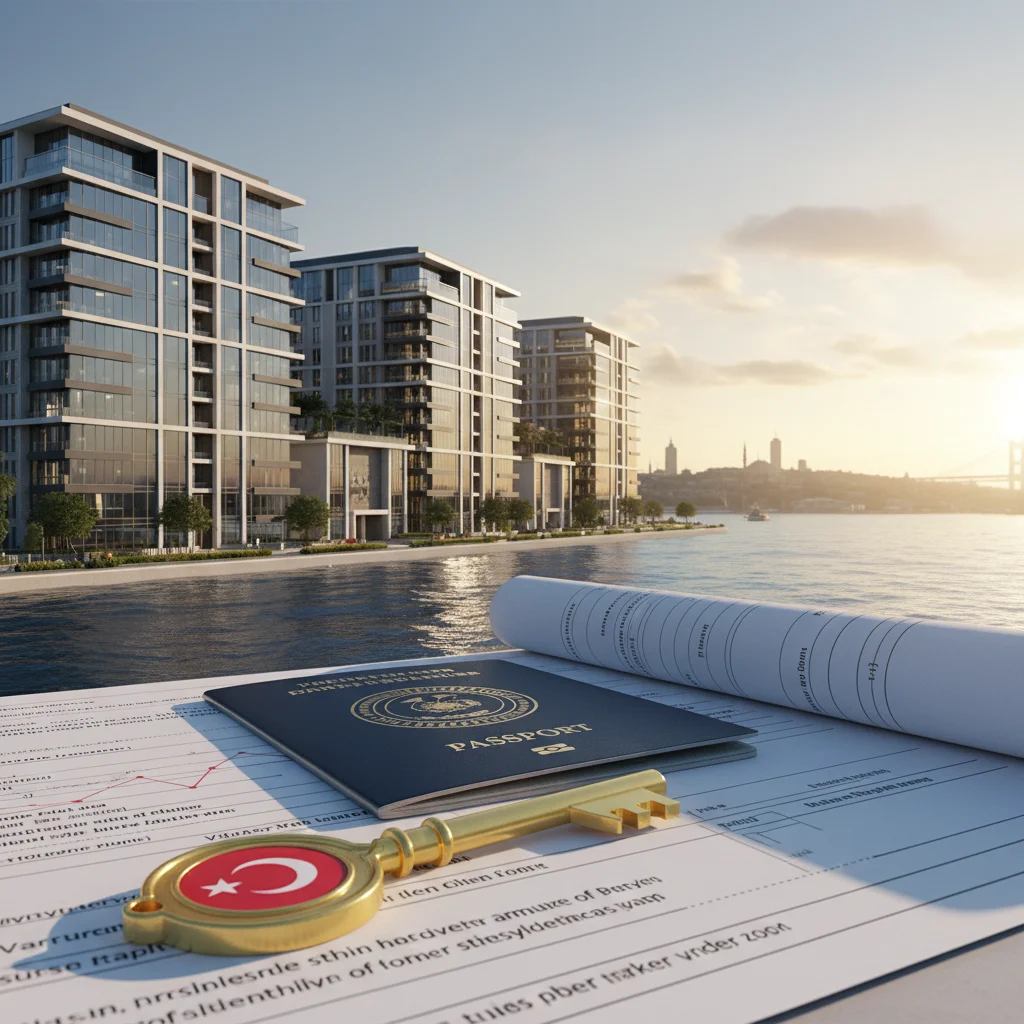
Over the past decade, Turkey has positioned itself at the crossroads of global commerce, tourism, and strategic real estate development. For international investors, business owners, and families seeking greater global mobility alongside a tangible, income-generating asset, obtaining Turkish citizenship through property acquisition has become one of the most compelling programs worldwide. Unlike pure donation programs that offer no financial return, Turkey allows foreign nationals to acquire a second passport by purchasing residential or commercial real estate while retaining full ownership and rental income potential.
As of 2026, the Turkish Citizenship by Investment program continues to attract buyers from Europe, the Middle East, Asia, and North America. Its appeal rests on three core pillars: a relatively straightforward legal process, the inclusion of immediate family members, and a dynamic property market backed by strong domestic housing demand and booming tourism infrastructure. Whether your primary objective is securing a strategic backup residency, expanding your international business footprint, or diversifying your wealth into brick-and-mortar assets, understanding every legal and financial nuance of the process is essential before committing capital.
Turkey amended its citizenship regulations in recent years to tighten compliance, improve transparency, and ensure that incoming capital supports sustainable urban growth. Under the current 2026 legal framework, foreign nationals can apply for exceptional Turkish citizenship by purchasing one or more properties with a combined minimum valuation of 400,000 US dollars or the equivalent in foreign currency.
While the headline figure appears simple, the legal requirements attached to that investment are strict. Every step must be documented through official banking channels and verified by government-licensed appraisers. Failing to follow the exact sequence—such as transferring funds incorrectly or purchasing from an ineligible seller—can disqualify an otherwise valid property from citizenship eligibility.
Although real estate dominates investor preferences—accounting for the vast majority of applications—Turkey offers alternative financial routes to citizenship. Reviewing these side by side helps clarify why property remains the favored vehicle for most international buyers.
| Investment Route | Minimum Capital Required (2026) | Holding Period | Primary Advantage | Liquidity and Yield Profile |
|---|---|---|---|---|
| Real Estate Purchase | $400,000 | 3 Years | Tangible asset with rental income and capital growth | Moderate liquidity; annual rental yields typically 4% to 8% |
| Bank Deposit | $500,000 | 3 Years | Passive setup with no property management needed | High liquidity post-lockup; subject to currency conversion rules |
| Government Bonds | $500,000 | 3 Years | Sovereign-backed fixed income instrument | Predictable coupon returns; minimal administrative oversight |
| Fixed Capital Investment | $500,000 | 3 Years | Ideal for establishing commercial operations | Low short-term liquidity; requires ministry certification |
| Employment Creation | Minimum 50 Turkish Employees | Verified Operational Commitment | No fixed asset purchase threshold | High operational complexity and ongoing payroll obligations |
Looking for the best real estate investment opportunity in Istanbul?
We help you choose the right property based on your budget and goals
Get a Free Consultation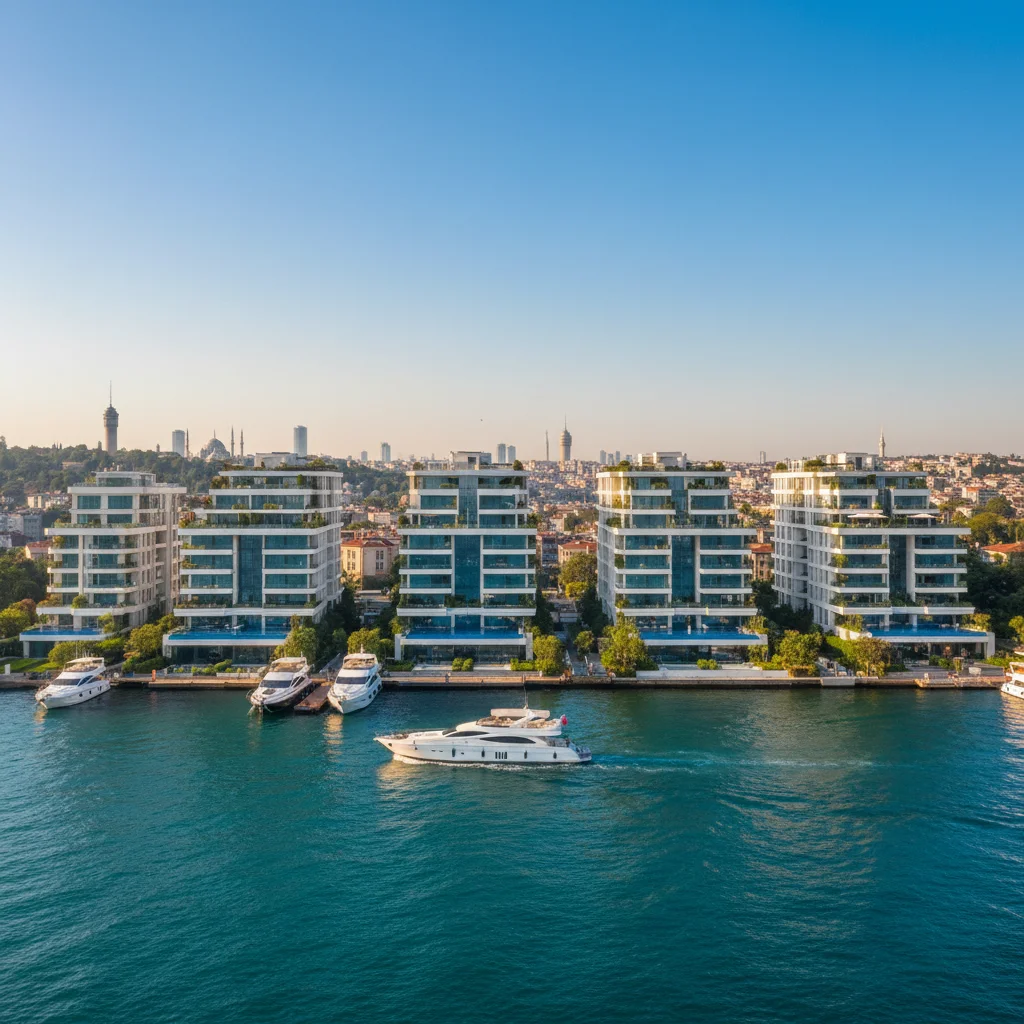
Navigating a foreign real estate market requires structured execution. Working with an experienced local real estate advisory and an independent bilingual property lawyer protects your capital at every stage. Below is the standard chronological roadmap from initial preparation to receiving your Turkish national identity card and passport.
Before signing any purchase agreement or transferring funds, every foreign buyer must secure a Turkish Tax Identification Number. In 2026, this can be obtained online through the national tax portal using passport details or in person at a local tax office. Once issued, you will use this number to open a local Turkish bank account. Having an active account in your own name is crucial because all purchase funds must be converted into Turkish Lira through the Central Bank mechanism via a licensed Turkish bank prior to title transfer.
Investors can choose a single luxury residence, multiple apartments, commercial offices, or land with an approved construction plan, provided the combined value meets or exceeds $400,000. During due diligence, your legal counsel should verify the title deed registry, confirm the absence of hidden debts or seizure orders, inspect building occupancy permits, and ensure the property meets strict municipal zoning rules. If you are purchasing an off-plan unit in a developing project, the contract must be notarized with a formal promise-to-sell agreement and registered at the land registry to qualify for citizenship.
To prevent inflated pricing schemes, Turkish authorities require an independent valuation report prepared by an appraisal firm licensed by the Capital Markets Board. The appraised value must confirm that the property is genuinely worth at least $400,000. Simultaneously, the buyer must sell foreign currency—such as US dollars, euros, or British pounds—to a Turkish bank, which then converts the funds into Turkish Lira and issues a Foreign Exchange Purchase Certificate. The exact amount on this certificate must match or exceed the declared property purchase price.
Once the appraisal report and currency exchange certificate are uploaded to the Land Registry portal, both buyer and seller—or their authorized legal representatives holding a notarized power of attorney—attend the Land Registry Directorate to finalize the ownership transfer. At this appointment, the official title deed is issued in the buyer's name, and a binding three-year no-sale restriction is placed directly onto the registry record.
After the title deed transfer is complete, your attorney submits the deed, bank payment receipts, currency certificate, and valuation report to the Ministry of Environment, Urbanization, and Climate Change. The ministry reviews the file to verify full compliance with citizenship legislation and issues a formal Certificate of Conformity. This document is the cornerstone of your citizenship petition.
Holding the Certificate of Conformity, the main applicant applies for a special short-term investor residence permit through the Presidency of Migration Management. Unlike standard touristic permits, this investor permit is processed swiftly and often does not require lengthy physical residency prior to filing for citizenship. Immediately afterward, the complete citizenship dossier—including apostilled birth certificates, marriage certificates, passport translations, and background clearances—is submitted to the Provincial Directorate of Civil Registration and Citizenship. Processing typically takes between four and eight months, concluding with biometric registration for your Turkish passport and national identity card.
Not every property buyer in Turkey aims for immediate citizenship. Many retirees, remote professionals, and long-stay visitors begin by exploring Turkish residency options, or use a residency permit as a bridge while finalizing larger investments. Understanding the distinction between property-based residency and citizenship by investment is vital because their financial thresholds and legal benefits differ considerably.
Under regulations reinforced heading into 2026, foreign buyers seeking a renewable short-term residence permit solely through residential property ownership must purchase a home valued at a minimum of $200,000 in eligible neighborhoods. Certain high-density districts across major cities like Istanbul and Antalya remain restricted for new foreign residency registrations if the foreign population ratio exceeds municipal caps. Checking neighborhood eligibility before signing a reservation deposit prevents unpleasant surprises later.
Selecting the right property goes far beyond meeting the $400,000 threshold. Because you must hold the asset for at least three years, location fundamentals, infrastructure growth, tenant demand, and resale liquidity will determine your ultimate return on investment.
Istanbul remains the undisputed hub for citizenship buyers, offering unmatched liquidity and diverse neighborhoods tailored to different investment strategies. On the European side, districts such as Basaksehir, Beylikduzu, and Bahcesehir attract middle-to-upper-income families seeking modern gated communities near major hospitals, universities, and Istanbul Airport. Meanwhile, central business corridors like Sisli, Levent, and Maslak appeal to corporate tenants and deliver strong year-round rental occupancy.
On the Asian side, neighborhoods like Kadikoy, Umraniye, and Atasehir have seen sustained capital appreciation driven by the Istanbul Financial Center and expanding metro networks. Buyers targeting long-term prestige often look toward coastal enclaves along the Bosphorus, where limited land supply preserves asset values regardless of broader macroeconomic shifts.
Antalya has evolved from a seasonal holiday destination into a thriving year-round international city. Districts such as Konyaalti, Lara, and Alanya attract European and Middle Eastern buyers looking for resort-style amenities, beachfront proximity, and robust holiday rental yields. New transportation upgrades, expanded international flight routes, and modern healthcare facilities have strengthened year-round tenant demand from remote workers and relocating families.
While less famous among overseas tourists, Ankara offers exceptional stability anchored by diplomatic missions, government institutions, and top-ranked universities. Investors seeking steady, low-volatility residential tenants often find Ankara's prime districts appealing. Similarly, Izmir and the Aegean peninsula—including Bodrum and Cesme—command premium luxury valuations, particularly for standalone villas catering to high-net-worth seasonal residents.
| City / Region | Primary Buyer Profile | Typical Gross Rental Yield (2026) | Key Investment Drivers |
|---|---|---|---|
| Istanbul (Central Business Hubs) | Corporate executives, global investors | 5.5% to 7.5% | High tenant liquidity, metro connectivity, financial sector growth |
| Istanbul (Suburban Master Communities) | Relocating families, long-term buyers | 4.5% to 6.5% | Spacious layouts, family amenities, proximity to new infrastructure |
| Antalya & Coastal Mediterranean | Lifestyle buyers, holiday rental investors | 6.0% to 8.5% | Strong tourism demand, expatriate communities, climate appeal |
| Ankara | Conservative yield-focused investors | 5.0% to 7.0% | Steady domestic demand, diplomatic and academic workforce |
| Bodrum & Aegean Coast | Ultra-high-net-worth villa buyers | 4.0% to 6.0% (seasonal peak) | Scarce coastal land, luxury hospitality branding, prestige value |
Looking for the best real estate investment opportunity in Istanbul?
We help you choose the right property based on your budget and goals
Get a Free Consultation
Smart real estate budgeting accounts for closing expenses and ongoing ownership taxes alongside the purchase price. Underestimating transaction costs can create last-minute liquidity bottlenecks at the Land Registry. Fortunately, Turkey offers specific tax incentives for qualifying foreign buyers that help offset upfront expenses.
The primary transaction expense is the title deed transfer fee, legally set at 4% of the declared sale price. Although law specifies splitting this fee equally between buyer and seller, market practice in Turkey frequently sees buyers negotiating or covering the full 4% depending on developer terms. Additionally, first-time foreign buyers purchasing newly constructed properties directly from a developer may qualify for a Value Added Tax exemption, saving anywhere from 1% to 20% of the net property price provided the funds enter Turkey in foreign currency and the buyer holds the property for at least one year (already satisfied by the three-year citizenship lockup).
| Expense Category | Estimated Cost Range | Notes and Applicability |
|---|---|---|
| Title Deed Transfer Tax | 2% to 4% ($8,000 – $16,000) | Calculated on declared title deed value |
| Valuation Report Fee | $350 – $600 | Paid to licensed appraisal entity prior to transfer |
| Land Registry Circulating Capital Fee | $200 – $400 | Standard administrative fee for foreign buyers |
| Legal Representation & Translation | $3,000 – $6,000 | Covers due diligence, power of attorney, and citizenship filing |
| Earthquake Insurance (Mandatory) | $100 – $250 annually | Compulsory prior to utility activation and deed registration |
| Citizenship Application Government Fees | $1,500 – $3,000 | Varies by family size and document apostille needs |
Once you take possession, holding costs in Turkey remain comparatively modest by international standards. Annual municipal property tax typically ranges from 0.1% to 0.2% of the municipal tax-assessed value for residential units in metropolitan areas. Apartment owners in gated residential complexes also pay monthly maintenance dues covering security, landscaping, elevators, swimming pools, and concierge services. If you lease out your property, net rental income is subject to progressive Turkish income tax, though standardized expense deductions or actual documented costs—such as management fees, renovations, and depreciation—can reduce your taxable base.
Because many citizenship investors reside outside Turkey for most of the year, effective property management is the difference between a passive, profitable asset and an administrative headache. Managing a foreign property successfully involves selecting the right leasing model, staying compliant with local landlord-tenant laws, and planning your exit strategy well before the three-year mark.
Turkey has modernized its rental regulations to balance tenant protections with investor clarity. Long-term residential leases provide predictable occupancy, lower turnover costs, and minimal day-to-day oversight. Tenants typically pay monthly complex dues and utility bills directly, and contracts follow standardized annual rent adjustment indices published by the Turkish Statistical Institute.
By contrast, short-term tourist rentals—stays under 100 days—are strictly regulated under updated tourism housing legislation. To operate a short-term vacation rental legally in 2026, owners must obtain a dedicated tourism accommodation permit from the Ministry of Culture and Tourism and secure unanimous written consent from all fellow apartment owners in the same building. For buyers targeting short-term holiday yields, purchasing an independent villa or a unit inside a licensed branded residence complex simplifies compliance dramatically.
Remote owners benefit significantly from partnering with full-service property management agencies. A reliable management partner handles critical operational tasks on your behalf:
Once three years have passed from the date the no-sale annotation was registered, you are legally free to remove the restriction at the Land Registry and sell the property—with zero impact on your citizenship status. Many investors choose to keep high-performing assets for ongoing Euro- or Dollar-indexed rental income, while others liquidate older units to rebalance their global portfolios. Note that under current Turkish tax law, capital gains from selling real estate held by an individual for more than five full years are generally exempt from personal capital gains tax, prompting many long-term investors to hold until year five before exiting.
Despite the clarity of Turkey's legal framework, preventable errors still delay or derail applications every year. Protecting your investment requires vigilance against several common traps:
Yes. You can purchase two or more properties—whether residential, commercial, or a mix—as long as their combined appraised value and declared purchase prices reach at least $400,000, all properties meet eligibility criteria, and the three-year no-sale annotation is placed on each title deed.
No. There is no minimum physical residency requirement before or after acquiring citizenship through investment, nor is there a Turkish language proficiency test or cultural interview for investor applicants.
Yes. Turkey fully permits dual and multiple citizenships. You are not required to renounce your existing nationality when acquiring a Turkish passport, though you should confirm whether your home country imposes any restrictions on holding a second citizenship.
Eligibility is generally assessed based on the child's age at the time the citizenship application is formally filed with the authorities. Submitting complete, properly apostilled family documents early prevents age-out complications.
If you finance part of the purchase through a bank loan, the mortgage amount is deducted from the property's value when calculating citizenship eligibility. Your net cash equity invested—excluding any loan—must independently reach at least $400,000.
Obtaining Turkish citizenship through real estate in 2026 offers a rare combination of lifestyle flexibility, family security, and exposure to one of Eurasia's most resilient property markets. By treating the acquisition first and foremost as a disciplined real estate investment—prioritizing legal due diligence, transparent banking trails, prime micro-locations, and professional property management—you position yourself to enjoy both lifelong citizenship benefits and sustainable financial returns.
Information sourced from Emlak Platform, Mbany Real Estate, and Massar Istanbul.