US Dollar - USD
- Turkish Lira - TRY
- US Dollar - USD
- Euro - EUR
- Pound sterling - GBP
- Russian Ruble - RUB
- Chinese Yuan - CNY
- Georgian lari - GEL
- Saudi Riyal - SAR
- UAE Dirham - AED
- Syrian Pound - SYP
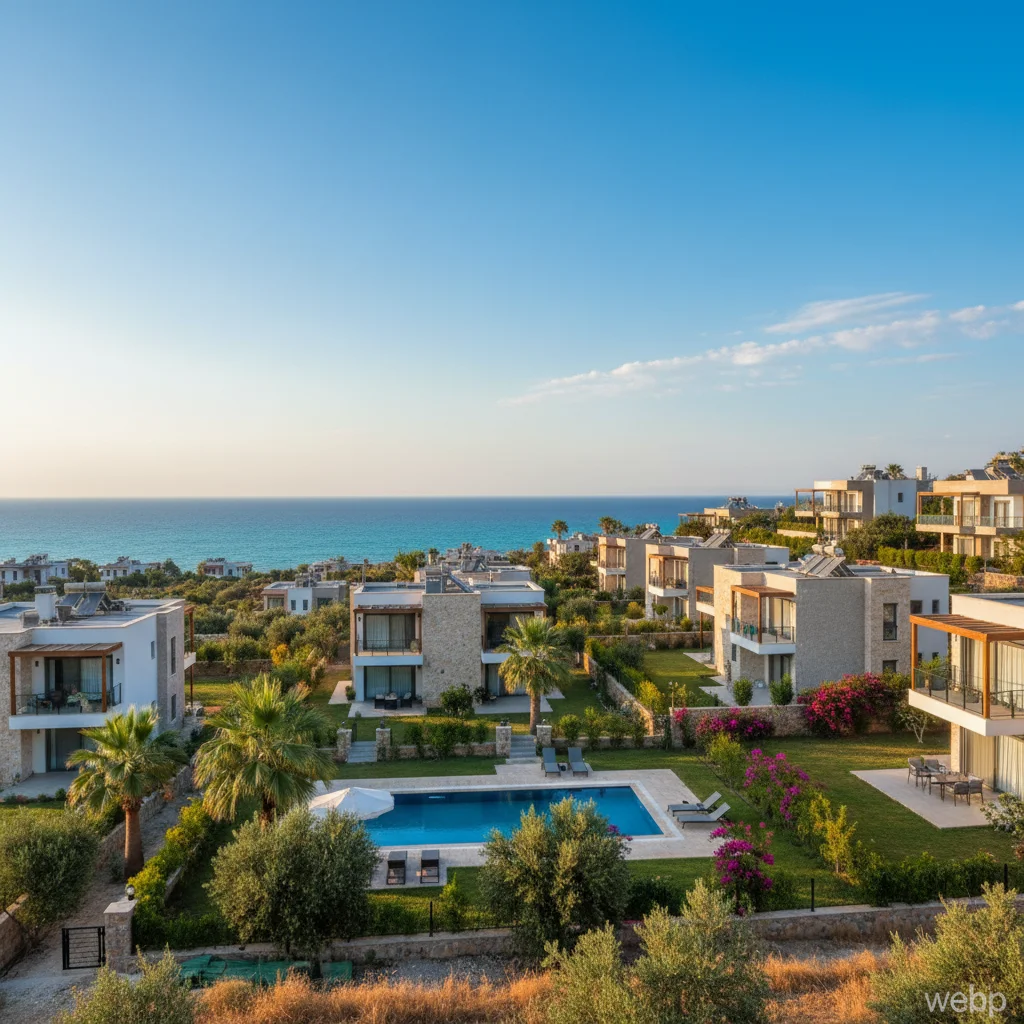
Antalya has long stood as Turkey's premier Mediterranean real estate destination, drawing European retirees, Middle Eastern families, and global investors looking for year-round sunshine and strong property fundamentals. While beachfront estates in Konyaaltı or luxury golf mansions in Belek often command seven-figure price tags, a lesser-known segment of the market continues to attract savvy buyers: cheap villas in Antalya. In 2026, finding an affordable villa on the Turkish Riviera does not mean settling for substandard construction or remote, unserviced land. Instead, it requires understanding how geography, building typology, and municipal growth corridors shape local pricing.
Whether your goal is relocating with family, securing a Turkish residence permit, generating seasonal rental income, or assembling a portfolio toward Turkish citizenship by investment, knowing where value hides in Antalya is essential. This guide breaks down realistic budgets, the best affordable villa districts, legal due diligence, residency thresholds, and practical property management strategies for international buyers.
In the context of Antalya's property market, the term "cheap" is relative to coastal luxury benchmarks. Across central beachfront neighborhoods, detached homes routinely exceed $750,000 to $1.5 million. By contrast, entry-level and budget-friendly villas in Antalya generally fall between $165,000 and $340,000 in 2026, depending on plot size, proximity to the sea, and whether the home is standalone or semi-detached.
Understanding what drives these lower price points helps buyers distinguish genuine bargains from properties with legal or structural compromises.
Antalya Province stretches along more than 600 kilometers of coastline and encompasses diverse micro-markets. Rather than searching broadly across the entire province, budget-focused villa buyers should concentrate on five proven sub-markets where supply, infrastructure, and resale liquidity intersect.
Located roughly 20 to 25 minutes north of central Antalya along the road toward Burdur, Döşemealtı has emerged as the flagship hub for affordable detached villas. Set at a slightly higher elevation than the coast, the district enjoys lower summer humidity, pine forest surroundings, and cooler evenings. Because land parcels are larger and zoning favors low-rise residential construction, builders deliver standalone three- and four-bedroom villas with private pools inside gated compounds starting around $230,000 to $330,000. Older resale villas or twin units in neighborhoods like Yeşilbayır and Yeniköy occasionally appear near the $190,000 to $220,000 mark. Proximity to Antalya Bilim University and private international schools makes Döşemealtı especially popular among year-round expat families.
Kepez is Antalya's largest urban district by population, sitting just inland from Muratpaşa and Konyaaltı. While Kepez is predominantly known for mid-rise apartment blocks, northern pockets such as Varsak, Odabaşı, and Duacı feature quiet residential streets with modest detached homes and boutique twin-villa projects. Prices here can start between $175,000 and $260,000. Buyers gain rapid access to Antalya's tram network, major shopping malls, Kepez State Hospital, and Antalya International Airport—often within a 20-minute drive—without paying coastal premiums.
On the eastern side of Antalya Province, Alanya remains one of Turkey's most liquid real estate markets for foreign buyers. While central Alanya and Oba focus heavily on resort apartments, the eastern and western outskirts offer notable villa value:
Aksu, anchored by the fast-growing Altıntaş corridor near Antalya Airport, has transitioned into a major hub for modern master-planned communities. While Altıntaş is largely apartment-focused, peripheral zones of Aksu and neighboring Serik (specifically Kadriye and the outskirts of Belek) feature semi-detached villas priced between $220,000 and $320,000. Buyers here benefit from proximity to championship golf courses, The Land of Legends theme park, and high seasonal rental demand from holidaying families.
For buyers prioritizing dramatic Taurus Mountain scenery or tranquil coastal towns, Kemer's residential valleys—such as Arslanbucak and Göynük—and the eastern town of Gazipaşa offer compelling alternatives. In Arslanbucak, inland from Kemer's marina, compact three-bedroom compound villas frequently trade from $200,000 to $280,000. Meanwhile, Gazipaşa continues to attract early-stage investors drawn by its domestic and international airport, uncrowded beaches, and lower entry prices starting around $165,000 to $240,000 for modest villas and village-edge homes.
| District / Sub-Market | Typical Entry Price (2026) | Common Villa Type | Distance to Nearest Beach | Primary Buyer Profile |
|---|---|---|---|---|
| Döşemealtı | $210,000 – $330,000 | Detached and gated compound villas | 20 – 25 minutes | Relocating families, remote workers |
| Kepez (Varsak / Odabaşı) | $175,000 – $260,000 | Twin villas and modest standalone homes | 15 – 20 minutes | Budget city buyers, long-term residents |
| Alanya (Demirtaş / Konaklı) | $180,000 – $290,000 | Twin villas and resort-complex villas | 5 – 12 minutes | Holiday-home owners, yield investors |
| Aksu / Serik Outskirts | $220,000 – $320,000 | Modern semi-detached villas | 8 – 15 minutes | Golf tourists, short-let investors |
| Kemer (Arslanbucak) and Gazipaşa | $165,000 – $280,000 | Compound villas and mountain-view homes | 5 – 15 minutes | Retirees, nature and tranquility seekers |
Looking for the best real estate investment opportunity in Istanbul?
We help you choose the right property based on your budget and goals
Get a Free Consultation
Buying an affordable villa in Antalya is rarely just a lifestyle decision; for most international purchasers, capital preservation and rental cash flow carry equal weight. Compared to overpriced metropolitan markets in Western Europe or North America, Antalya's lower entry prices allow investors to achieve attractive gross yields while holding a tangible hard asset priced against international demand.
Long-term annual leases in districts like Döşemealtı, Kepez, and Konaklı typically generate gross yields of 5% to 7% annually. Demand comes from relocating international families, remote professionals, university staff, and Turkish executives seeking larger living spaces than city-center apartments provide. Long-term leases reduce management headaches and keep wear and tear predictable, though landlords must adhere to Turkish tenancy laws regarding annual renewal terms.
Holiday letting, by contrast, targets peak tourist seasons running from April through October, with winter golf and long-stay retirees filling shoulder months in Serik, Belek outskirts, and Alanya. Well-marketed three-bedroom villas with private pools can achieve gross yields of 7% to 10% before management fees and utilities—provided the property holds the proper legal permits.
Investors planning to list an Antalya villa on platforms like Airbnb or Booking.com in 2026 must comply with Turkey's Tourism Purpose Housing Regulation (Law No. 7464). Any residential property rented to tourists for periods of 100 days or less at a time requires a Tourism Housing Permit (Turizm Amaçlı Kiralama İzin Belgesi) issued by the Ministry of Culture and Tourism, along with an official plaque displayed at the entrance.
Here is why standalone villas have a major advantage over apartments under this law: in multi-unit apartment buildings, obtaining a short-term rental permit requires unanimous written consent from 100% of all co-owners in the building—a near-impossible hurdle in large complexes. For an independent detached villa on its own parcel, there are no upstairs or downstairs apartment neighbors blocking your application, making compliance far smoother. If your budget villa sits inside a gated villa site (site) sharing common parcels or pools, however, you must verify the site's management plan and obtain required homeowner approvals before assuming short-term rentals are permitted.
Several structural trends support steady price growth in Antalya's affordable villa belts:
Real estate remains the primary gateway for foreign nationals seeking legal stay or second citizenship in Turkey. Before signing a reservation agreement on a cheap villa in Antalya, buyers should align their budget with Turkey's official valuation thresholds.
Foreign buyers who wish to obtain a property-based short-term residence permit (Taşınmaz Amaçlı İkamet İzni) must meet a minimum property valuation threshold of $200,000 USD. Crucially, the official Capital Markets Board (SPK)-licensed appraisal report—and the declared value on the Tapu (title deed)—must reflect at least $200,000. Buying a distressed villa for $170,000 may offer a bargain on paper, but it will not qualify for a property-owner residence permit on its own.
Additionally, buyers must verify that the villa's specific neighborhood (mahalle) is open to new foreign residency registrations. The Presidency of Migration Management restricts new residency permits in neighborhoods where foreign residents exceed a set percentage of the local population. Several popular coastal neighborhoods in Konyaaltı, Muratpaşa, and central Alanya have been closed to new residency registrations, whereas many areas in Döşemealtı, Kepez, Aksu, and Gazipaşa remain open. Checking the open-neighborhood status prior to placing a deposit is non-negotiable.
Turkey's Citizenship by Investment program requires a minimum real estate investment of $400,000 USD, held for at least three years with a non-sale annotation placed on the title deed. While a single budget villa priced at $210,000 does not meet the threshold alone, the law allows investors to combine multiple properties—such as purchasing two affordable villas in Döşemealtı or Alanya totaling $400,000 or more, or pairing one budget villa for personal use with a rental apartment in Aksu or Kepez.
To qualify under the $400,000 citizenship route in 2026, all funds must be transferred via Turkish bank channels with a Foreign Exchange Purchase Certificate (Döviz Alım Belgesi), and the properties must be purchased from a Turkish citizen or Turkish-owned company—never from another foreign seller.
| Immigration Pathway | Minimum Real Estate Value | Holding Requirement | Neighborhood Restrictions | Key Advantage for Budget Villa Buyers |
|---|---|---|---|---|
| Property Residence Permit | $200,000 USD (SPK appraisal and Tapu) | Valid while you own the property | Must be in an open mahalle | Accessible with a single entry-level villa |
| Turkish Citizenship by Investment | $400,000 USD (single or multiple properties) | Minimum 3-year hold annotation | Applies nationwide (no closed-zone bar on citizenship, though residency differs) | Allows combining two cheap villas for dual use or yield |
Looking for the best real estate investment opportunity in Istanbul?
We help you choose the right property based on your budget and goals
Get a Free Consultation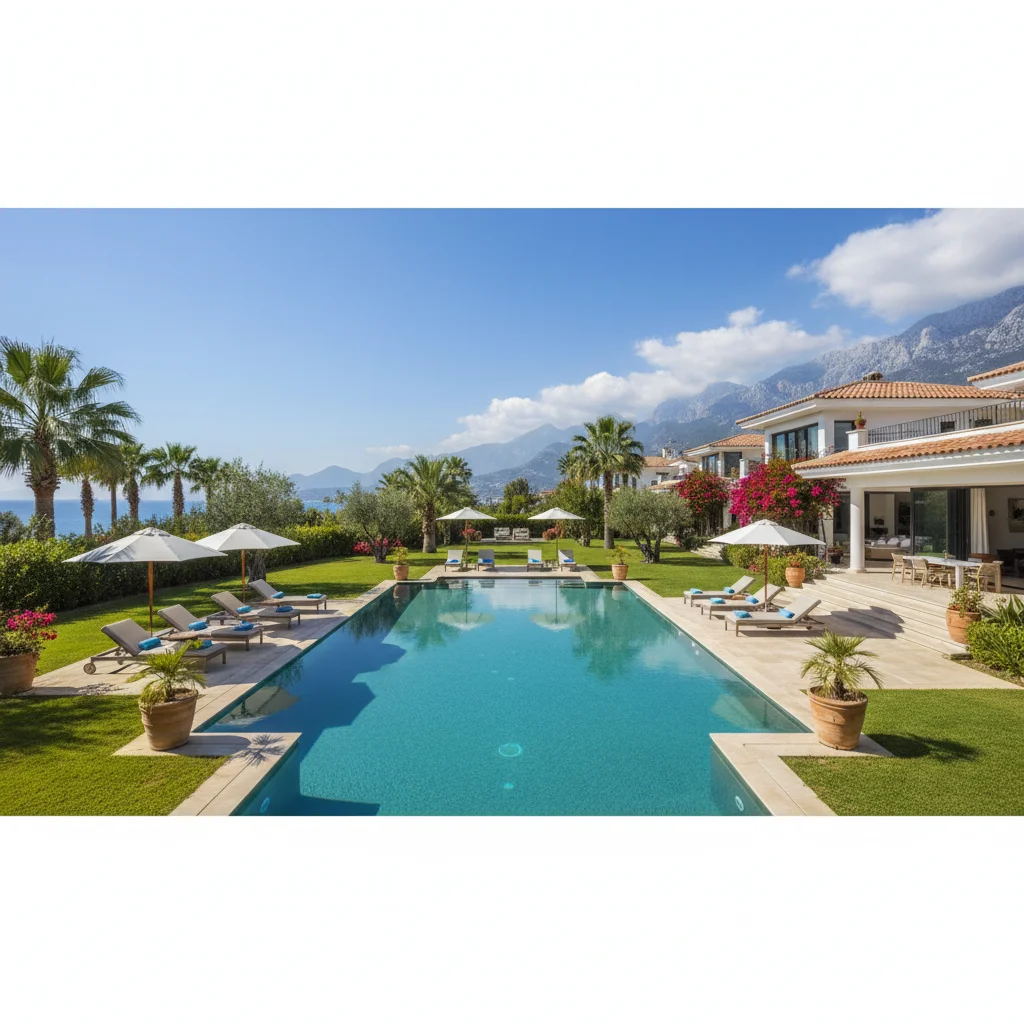
Turkey offers one of the fastest and most transparent title deed transfer systems in the Mediterranean, often taking just one to two weeks from agreement to ownership once documents are ready. Following a disciplined sequence protects your capital at every stage.
When budgeting for a cheap villa in Antalya, set aside roughly 6% to 8% above the agreed purchase price to cover transaction fees and setup costs:
Lower-priced villas attract bargain hunters, which occasionally exposes buyers to cut corners in older buildings or speculative off-plan launches. Performing four critical checks eliminates nearly all major risks.
Always ask whether the villa has an official İskan (building completion and habitation license). Without an Iskan, you may face higher commercial rates for electricity and water, difficulties securing mortgages or insurance claims, or unresolved municipal fines left behind by the original builder. Ensure the Tapu reads Kat Mülkiyeti (full freehold ownership of a completed structure) rather than only Arsa (bare land) on a finished house.
Occasionally, very cheap "villas" advertised on rural outskirts of Aksu, Serik, or Kepez turn out to be unpermitted structures or tiny homes placed on agricultural land (Tarla). Foreigners face strict restrictions on buying agricultural plots without approved development plans, and municipal authorities can demolish unauthorized buildings. Confirm that the parcel is zoned for residential construction (Konut İmarlı).
Turkey enforces modern seismic building codes, particularly for properties constructed after 2018. When inspecting an affordable resale villa built in the early 2000s, hire a civil engineer or building surveyor to check concrete integrity, waterproofing around flat roofs and basements, dampness on north-facing walls, and the condition of pool filtration systems.
Some agencies market identical listings to foreign buyers at higher prices than local Turkish portals show. Always cross-check comparable sales per square meter in the same neighborhood, verify that your broker holds an official Ministry of Trade real estate license (Taşınmaz Ticareti Yetki Belgesi), and rely on the independent SPK valuation report to keep pricing anchored to reality.
Owning a villa—even an affordable one—carries ongoing upkeep responsibilities that differ from lock-and-leave apartments. Gardens grow fast in Antalya's Mediterranean climate, pools require weekly chemical balancing, and winter rainstorms demand periodic roof and drainage inspections.
If your villa sits within a managed residential site, monthly site maintenance fees (Aidat) typically run between $50 and $150 per month, covering 24/7 security, communal landscaping, and shared infrastructure. For standalone villas outside managed compounds, hiring a reputable local property management company is well worth the cost. Full-service managers typically charge a flat monthly retainer ($60 to $120) for empty-home keyholding, pool and garden upkeep, and bill payments, or 15% to 25% of gross rental revenue when handling guest check-ins, housekeeping, dynamic pricing, and Turkish rental income tax filings.
Annual ownership taxes remain notably low by international standards: municipal property tax (Emlak Vergisi) in Antalya is typically 0.2% of the municipal tax-assessed value per year—often translating to just $150 to $350 annually for an entry-level villa.
While distressed rural homes can occasionally appear lower, a safe, legally sound budget for a habitable twin or compact detached villa with proper Iskan in districts like Kepez, Demirtaş, or Gazipaşa starts around $165,000 to $195,000. For a modern detached villa with a private pool in Döşemealtı, plan for at least $220,000 to $260,000.
Yes. Many off-plan villa developers in Aksu, Döşemealtı, and Alanya offer 12- to 24-month interest-free payment plans with a 35% to 50% down payment. Note that title deeds are usually transferred once full payment is completed, so ensure your purchase contract is notarized and registered at the Land Registry.
No. At the Tapu transfer, the Land Registry legally requires a certified sworn translator if either party does not speak Turkish. Major real estate agencies, lawyers, banks, and property managers in Antalya operate fluently in English.
Annual municipal property taxes and mandatory earthquake insurance remain very modest. Your largest variable costs will be summer air conditioning, pool electricity and chemicals, and garden irrigation, which typically average $150 to $300 per month depending on occupancy and pool size.
Note: Market data, district pricing benchmarks, and regulatory insights in this article were sourced from Emlak Platform, Mbany Real Estate, and Massar Istanbul.