US Dollar - USD
- Turkish Lira - TRY
- US Dollar - USD
- Euro - EUR
- Pound sterling - GBP
- Russian Ruble - RUB
- Chinese Yuan - CNY
- Georgian lari - GEL
- Saudi Riyal - SAR
- UAE Dirham - AED
- Syrian Pound - SYP
Turkey has long occupied an enviable position on the global map, bridging European commercial hubs and Middle Eastern capital markets while offering a Mediterranean lifestyle at a fraction of Western European property prices. Over the past several years, its real estate sector has evolved from a regional vacation-home market into a structured destination for international wealth preservation and second-citizenship planning. In 2026, acquiring Turkish citizenship by real estate investment remains one of the most straightforward and asset-backed pathways to a second passport.
Unlike pure donation programs that offer no financial recovery, the Turkish model allows investors to place capital into tangible bricks and mortar. You retain full ownership of the property, collect rental income in a high-demand market, and gain the right to sell the asset after a mandatory holding period without losing your citizenship status. However, navigating Turkish title deed regulations, currency conversion mandates, and municipal zoning nuances requires precision. Understanding the exact legal framework before transferring a single dollar is what separates a smooth acquisition from a stalled application.
Launched to attract foreign direct investment into the country's thriving construction and urban renewal sectors, the Turkish Citizenship by Investment (CBI) program is governed by clear statutory guidelines. While various routes exist—such as bank deposits, government bonds, or capital investments—real estate remains the overwhelming favorite among international families and institutional buyers alike.
To qualify for citizenship via property acquisition in 2026, an applicant must purchase real estate with a minimum verified value of $400,000 USD (or its equivalent in another convertible foreign currency). Crucially, this $400,000 figure is not merely the price written on a developer's brochure; it must be backed by both the official purchase price declared at the Land Registry and an independent valuation report.
Equally important is the Central Bank currency rule. Under regulations enforced by the Turkish Ministry of Environment, Urbanization, and Climate Change, foreign buyers cannot simply pay a seller in Turkish Lira directly from abroad or hand over physical cash. The foreign currency equivalent of the purchase price must be sold to a Turkish bank, which in turn sells it to the Central Bank of the Republic of Turkey (TCMB) prior to the title deed transfer. In exchange, the bank issues a mandatory Foreign Exchange Purchase Certificate, known locally as the Döviz Alım Belgesi (DAB). Without this document, the Land Registry will not process a citizenship-eligible transfer.
Once the title deed is transferred, the investor must sign a formal undertaking placing a three-year no-sale annotation (şerh) on the property. During these 36 months, the property cannot be sold to any third party, though it can be rented out freely for steady passive income.
One of the strongest appeals of the Turkish program is its inclusive family structure. A single $400,000 real estate investment covers:
Successful applicants receive full Turkish citizenship for life, which is passed down to future generations by descent. Turkey permits dual citizenship, meaning you are not required to renounce your existing nationality unless your home country prohibits holding multiple passports. Once naturalized, citizens gain unrestricted access to Turkey's national healthcare infrastructure, public and private universities, and the legal right to work or establish businesses without needing annual work permits. On the mobility front, a Turkish passport provides visa-free or visa-on-arrival access to more than 110 destinations worldwide, including Japan, South Korea, Singapore, Qatar, and most of South America, alongside eligibility to apply for the U.S. E-2 Investor Visa under existing bilateral treaties.
Looking for the best real estate investment opportunity in Istanbul?
We help you choose the right property based on your budget and goals
Get a Free Consultation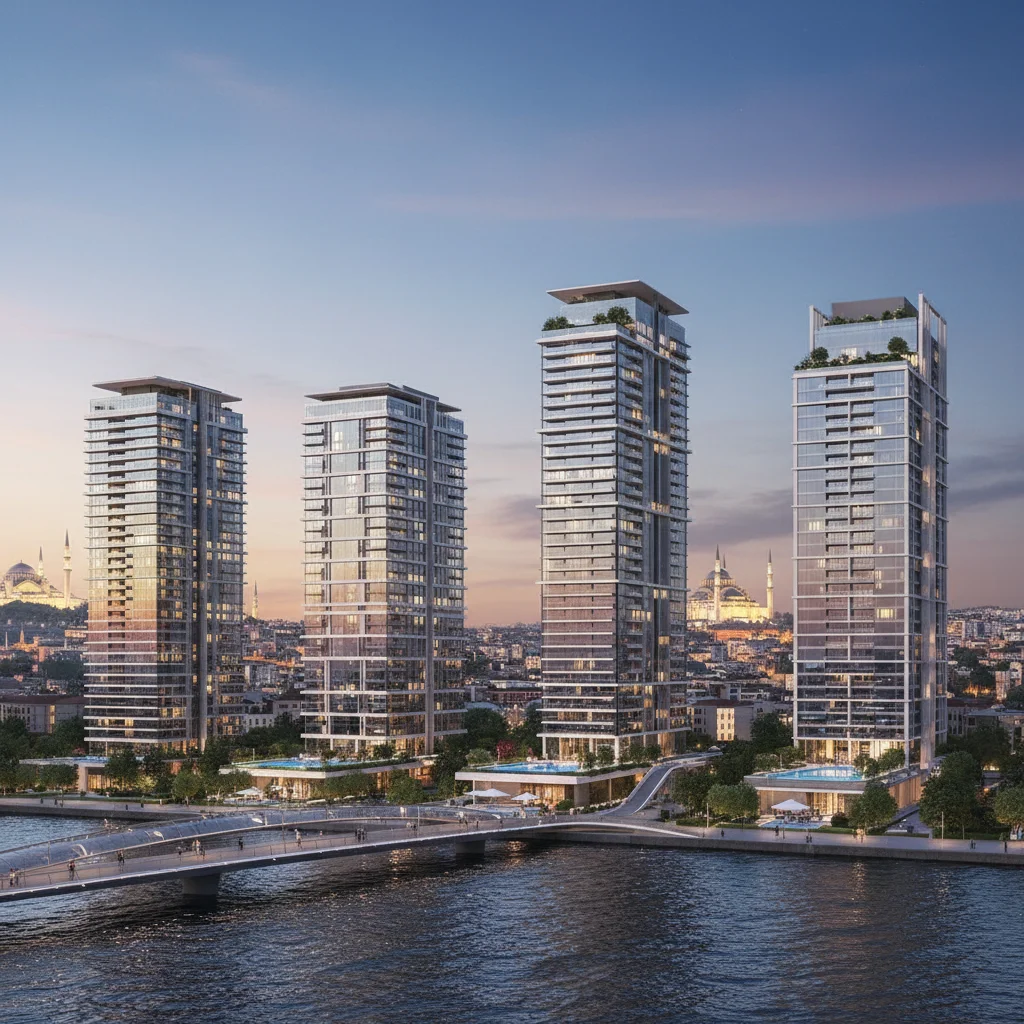
Not every $400,000 property on the market qualifies for citizenship. Over the years, Turkish authorities have tightened due diligence rules to prevent artificial price inflation and circular trading. Verifying eligibility at the outset saves months of costly legal restructuring.
Every property considered for citizenship must undergo a mandatory appraisal conducted by a firm licensed by the Capital Markets Board of Turkey (SPK). These independent appraisers assess the fair market value based on comparable neighborhood sales, square footage, building age, and zoning status. The SPK report, the declared sales price on the Title Deed (Tapu), and the total transferred via the DAB certificate must all meet or exceed the $400,000 threshold.
Additionally, strict ownership history rules apply:
Investors are not restricted to buying a single luxury apartment. Turkish law allows you to purchase residential units, commercial offices, retail shops, or even zoned development land, and you may combine multiple properties as long as their cumulative verified value reaches $400,000 and all units receive the three-year holding annotation simultaneously.
| Property Category | Citizenship Eligibility | Typical Annual Gross Yield | Primary Investor Advantage |
|---|---|---|---|
| Finished Residential Apartments | Eligible (Full Tapu) | 5% to 8% | Immediate rental income and high resale liquidity after three years. |
| Off-Plan Developments | Eligible (Notarized Promise to Sell) | 6% to 9% (Post-Completion) | Lower entry price per square meter and potential capital appreciation during construction. |
| Commercial Offices and Retail | Eligible (Full Tapu) | 7% to 10% | Long-term corporate leases with predictable commercial tenant profiles. |
| Zoned Land Parcels | Eligible (Subject to Construction Plan) | 0% (Capital Appreciation Only) | High long-term upside in urban expansion corridors, though requires active development plans within two years if agricultural. |
If purchasing an off-plan property where individual title deeds have not yet been issued, you must sign a Notarized Promise to Sell Contract (Satış Vaadi Sözleşmesi) and register an annotation on the master land deed. Crucially, the entire $400,000 value must be paid upfront—installment plans do not count toward the citizenship threshold until the paid and documented amount reaches $400,000.
The administrative journey from property selection to holding a Turkish passport typically takes between four and eight months when documentation is prepared accurately. While investors can travel to Turkey to oversee each stage personally, the entire transaction—including bank account opening, title deed transfer, and citizenship filing—can also be executed remotely via a notarized and apostilled Power of Attorney (POA) granted to an experienced Turkish real estate lawyer.
Before any financial transaction or utility registration can occur, the investor must obtain a Turkish Tax Identification Number (Vergi Kimlik Numarası). This can be generated quickly online through the Interactive Tax Office portal or in person at any local tax office using a valid passport. Once the tax number is active, you open an individual account at a reputable Turkish retail bank. Having an account in your own name ensures transparent fund tracing from your home country into Turkey and simplifies future rental collection and utility auto-payments.
After selecting a qualifying property (or portfolio of properties) and signing a reservation agreement, your legal counsel conducts title deed due diligence at the Land Registry (Tapu) and municipality. Concurrently, an independent valuation request is submitted through the centralized Web-Tapu system, which randomly assigns an SPK-licensed appraisal firm to prevent bias. The appraiser inspects the physical property, verifies building permits (İskan or Kat İrtifakı), and issues a digital valuation report valid for three months.
You transfer the purchase funds in USD, EUR, or GBP from your international bank account into your Turkish bank account. Your Turkish bank then converts the foreign currency into Turkish Lira at the daily Central Bank rate and issues the DAB certificate, explicitly referencing the buyer's passport number, the property details, and the purpose of citizenship acquisition. The resulting Turkish Lira is then wired directly from your account to the seller's bank account, generating official bank receipts (dekont) stamped by the bank.
With the valuation report, DAB certificate, and compulsory earthquake insurance (DASK) in place, the Land Registry schedules the transfer appointment. Both buyer and seller (or their legal proxies) attend the Tapu office—accompanied by a sworn translator if the buyer does not speak Turkish—to sign the final deed. Simultaneously, the three-year non-sale restriction is officially recorded in the registry ledger.
Once the Tapu is issued, the Land Registry forwards the file to the General Directorate of Land Registry and Cadastre, which issues the Certificate of Conformity (Uygunluk Belgesi) confirming that the investment meets all citizenship criteria. Armed with this certificate, your lawyer submits two final applications:
During the security and background screening phase, applicants provide fingerprints either inside Turkey or at a Turkish Consulate abroad. Once approved by the Presidency, naturalization certificates are issued, allowing you to apply for your Turkish national ID card (Kimlik) and biometric passport.
Choosing where to allocate $400,000 or more depends heavily on whether your primary goal is capital preservation, maximum rental yield, lifestyle relocation, or quick resale liquidity after three years. Turkey is far from a monolithic market; regional dynamics vary dramatically.
Accounting for the vast majority of foreign real estate transactions, Istanbul functions as Turkey's economic engine, home to over 16 million residents and multinational headquarters. Its diverse districts cater to distinct investment strategies:
Antalya has cemented its reputation as the Mediterranean's premier year-round resort city, attracting millions of European, CIS, and Gulf visitors. Districts like Konyaaltı and Lara offer modern complexes near Blue Flag beaches, international schools, and a thriving expatriate community. Further east along the coast, Alanya provides larger residential footprints at lower entry prices, making it possible to purchase two coastal apartments that jointly satisfy the $400,000 threshold while diversifying tenant risk.
For investors seeking non-touristic, fundamentals-driven stability, Ankara—the nation's capital—offers steady tenant demand fueled by government ministries, embassies, defense contractors, and top-tier universities in districts like Çankaya. Meanwhile, Izmir on the Aegean coast blends industrial commerce with high-end coastal living. Areas such as Bornova, Bayraklı, and the luxury peninsula resort town of Çeşme have seen growing interest from boutique developers and domestic high-net-worth buyers alike.
| City | Primary Market Driver | Liquidity Profile | Ideal Investor Profile |
|---|---|---|---|
| Istanbul | Commerce, finance, urban renewal, transit expansion | Very High (Largest domestic buyer pool) | Capital growth seekers, corporate yield investors, frequent travelers. |
| Antalya | International tourism, seasonal and expatriate demand | High (Strong foreign and domestic second-home demand) | Lifestyle buyers, coastal rental investors, retirees. |
| Ankara | Government, diplomatic missions, defense, universities | Moderate to High (Driven by local salaried tenants) | Conservative investors prioritizing low vacancy rates and steady Lira or indexed leases. |
| Izmir | Aegean trade, tech hubs, domestic lifestyle migration | Moderate to High (Growing domestic affluent market) | Long-term holders targeting emerging Aegean coastal appreciation. |
Looking for the best real estate investment opportunity in Istanbul?
We help you choose the right property based on your budget and goals
Get a Free Consultation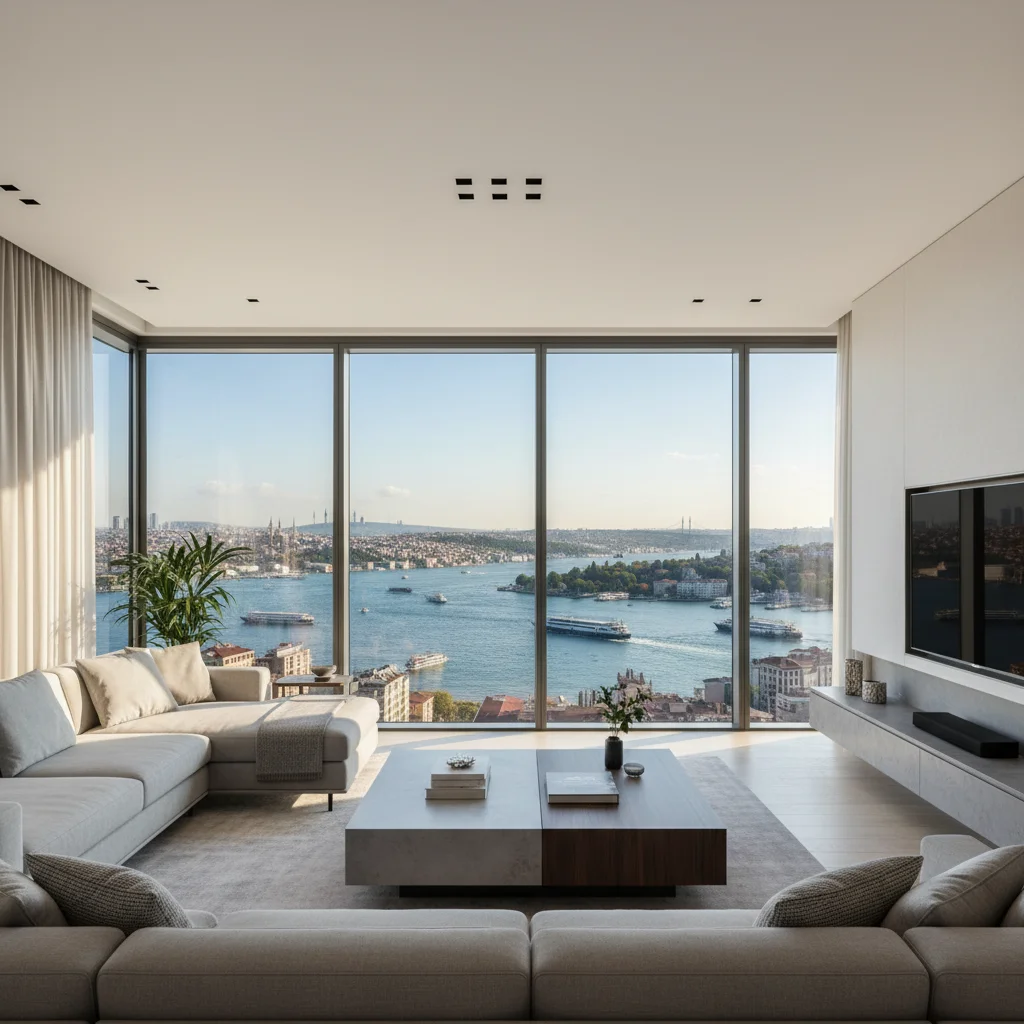
Not every property buyer immediately commits $400,000 for citizenship, and those who do still face practical questions about managing their asset across borders once the passport arrives.
For investors seeking legal residency in Turkey without allocating $400,000, Turkey offers a Real Estate Residence Permit (Taşınmaz Amaçlı İkamet İzni). In 2026, the minimum property valuation required to qualify for a standard property-based residence permit is $200,000 USD nationwide (a threshold raised from earlier limits to curb speculative overcrowding in major cities). Additionally, applicants must ensure the property is not located within neighborhoods currently closed to new foreign residency registrations due to high foreign population density. While the residence permit grants the right to live in Turkey and must be renewed every one to two years, it does not confer citizenship, voting rights, or automatic work authorization—and five years of uninterrupted physical residency is required before one can apply for naturalization through the standard residency track.
Owning property remotely in Turkey is straightforward if you align your leasing strategy with current local laws. In recent years, Turkey introduced significant updates to both short-term and long-term rental governance:
Even in a well-regulated market, international buyers occasionally stumble into preventable traps when relying exclusively on unverified sales agents rather than independent legal counsel.
A common mistake occurs when a buyer agrees to purchase a luxury unit for $410,000 based on a developer's price list, only for the independent SPK appraiser to value the unit at $340,000 based on older neighborhood comparables. If the SPK valuation falls short of $400,000, the citizenship file will be rejected regardless of how much money you paid. Always include an explicit legal clause in your purchase contract making the sale contingent upon an SPK report confirming at least $400,000—or commission a preliminary valuation before transferring your deposit.
Never purchase an off-plan unit solely on an informal private contract without registering your rights at the Land Registry. Ensure the project holds valid construction permits and Kat İrtifakı (construction servitude) title deeds, or wait for the final Kat Mülkiyeti (full habitation title) if buying a completed building. Buying in projects with stalled zoning or missing occupancy permits (İskan) limits mortgageability for future Turkish buyers when you eventually decide to exit.
Beyond the $400,000 property price, budget accurately for transaction expenses. The standard Title Deed transfer tax (Tapu Harcı) is 4% of the declared property value (customarily split 2% buyer and 2% seller, though in practice buyers frequently negotiate or cover the full 4% depending on the deal). Add modest revolving fund charges, SPK appraisal fees, notarization costs, and legal representation fees. On the bright side, first-time foreign buyers who do not reside in Turkey and purchase brand-new properties directly from a licensed developer in foreign currency brought from abroad are generally eligible for a VAT exemption (saving 1% to 20% depending on property classification), provided they hold the property for at least three years.
Yes. Once the mandatory 36-month annotation period expires, you may apply to the Land Registry to remove the restriction and sell the property on the open market to either a Turkish citizen or another foreign buyer. Selling the property after three years has zero impact on the citizenship status granted to you, your spouse, or your children. However, as noted earlier, holding the asset for five years eliminates capital gains tax.
No. Unlike standard five-year naturalization through residency, the Citizenship by Investment program imposes zero physical residency requirements before or after approval. You do not need to live in Turkey for any minimum number of days per year, nor are applicants required to pass a Turkish language proficiency exam or cultural history interview.
You can combine multiple residential or commercial properties—even across different cities—to reach the $400,000 minimum threshold, provided all purchases belong to the same primary investor and are submitted together with three-year holding annotations. Co-ownership with an unrelated business partner is permitted only if your individual fractional share on the title deed independently equals or exceeds $400,000.
Real estate investment for Turkish citizenship remains compelling because it pairs sovereign mobility with a tangible, income-producing asset in one of Eurasia's most dynamic economies. By verifying the SPK valuation upfront, executing the Central Bank DAB currency exchange properly, selecting districts backed by genuine local demand, and partnering with independent legal and property management specialists, international investors can secure both a strategic family asset and a lifelong second citizenship with confidence.
Note: Information for this guide was sourced from Emlak Platform, Mbany Real Estate, and Massar Istanbul.