US Dollar - USD
- Turkish Lira - TRY
- US Dollar - USD
- Euro - EUR
- Pound sterling - GBP
- Russian Ruble - RUB
- Chinese Yuan - CNY
- Georgian lari - GEL
- Saudi Riyal - SAR
- UAE Dirham - AED
- Syrian Pound - SYP
Short-term real estate investment in Turkey has evolved from a niche hospitality alternative into one of the country's most rewarding property asset classes. With Turkey continually ranking among the top five most visited nations globally, welcoming over 55 million international tourists annually, the demand for flexible, serviced, and private holiday accommodations has skyrocketed. Foreign and domestic investors are increasingly pivoting away from traditional, multi-year residential contracts toward short-term and vacation rental strategies to capture higher yields, mitigate currency fluctuations, and maintain greater operational control over their physical assets.
Historically, long-term residential leases in Turkey offered predictable, albeit modest, returns. However, persistent inflationary pressures and statutory caps on annual residential rent increases led investors to re-evaluate their investment strategies. Short-term rentals—predominantly facilitated via digital channels like Airbnb, Booking.com, and VRBO—allow property owners to price their inventory dynamically in foreign currencies (Euro, US Dollar, or British Pound), thereby hedging against local currency depreciation while capturing peak-season tourist premiums.
When analyzing performance metrics across urban hubs like Istanbul and coastal resorts like Antalya, the cash flow disparity between tenancy structures becomes clear. While a standard long-term residential contract in Istanbul typically generates a gross rental yield of 4% to 6%, a strategically located and professionally managed short-term holiday rental can achieve gross yields between 8% and 14%.
This yield disparity stems from flexible pricing power. During peak travel seasons—such as the summer months along the Mediterranean or major cultural events and medical tourism periods in central Istanbul—average daily rates (ADRs) can double or triple. Furthermore, short-term arrangements reduce the risk of non-paying long-term tenants and mitigate protracted legal eviction disputes, granting property owners swift repossession rights and continuous access to maintain the home in showroom condition.
The sustained success of Turkey's short-term rental market relies on diversified, multi-layered demand drivers rather than seasonal leisure tourism alone:
In response to the exponential growth of vacation rentals and complaints regarding market transparency from the hotel sector, the Turkish government introduced comprehensive legislation. Enacted as Law No. 7464 on the Rental of Residential Properties for Tourism Purposes, this statutory framework fundamentally transformed how property owners legally market and manage short-term accommodations.
Under Law No. 7464, property owners renting residential premises for 100 days or fewer at a time must obtain a formal Tourism Residence Permit (Turizm Amaçlı Konut İzin Belgesi) from the Ministry of Culture and Tourism before listing their home on any public marketing platform. Operating without this official permit results in substantial administrative penalties, starting at 100,000 TRY for initial non-compliance, escalating up to 1,000,000 TRY alongside mandatory platform delisting for repeated offenses.
Upon permit issuance, owners receive a verified identification plaque, which must be prominently displayed at the exterior entrance of the residential unit. This plaque reassures guests of regulatory safety compliance and enables municipal inspectors to confirm that the dwelling meets national health, safety, and fire safety protocols.
The Turkish regulatory framework clearly differentiates between residential tenancies and hospitality-driven short lets:
The most consequential hurdle for private unit owners in multi-story residential blocks is the 100% building consent requirement. To secure a tourism rental permit for an apartment located in a standard multi-unit complex, the applicant must secure the unanimous, notarized approval of all registered unit owners within that specific building.
This clause effectively prevents single flat owners from running high-turnover vacation rentals if even one neighbor objects due to noise, security, or common-area preservation concerns. As a result, investor demand has largely shifted toward two specific property formats: standalone private villas and master-planned residential developments that hold pre-existing commercial or tourist hospitality status.
To preserve institutional real estate investment and facilitate foreign capital, Law No. 7464 contains an important exemption. Properties situated within "High-Standard Residences" (Residans)—master-planned luxury towers offering comprehensive on-site amenities such as 24/7 concierge, security, daily cleaning, dry cleaning, swimming pools, and dedicated gymnasiums—are exempt from the unanimous neighbor consent mandate. If the official architectural project or management plan explicitly authorizes short-term tourism rentals, individual investors may operate their suites freely, provided the building's central management or an authorized property management firm handles operations.
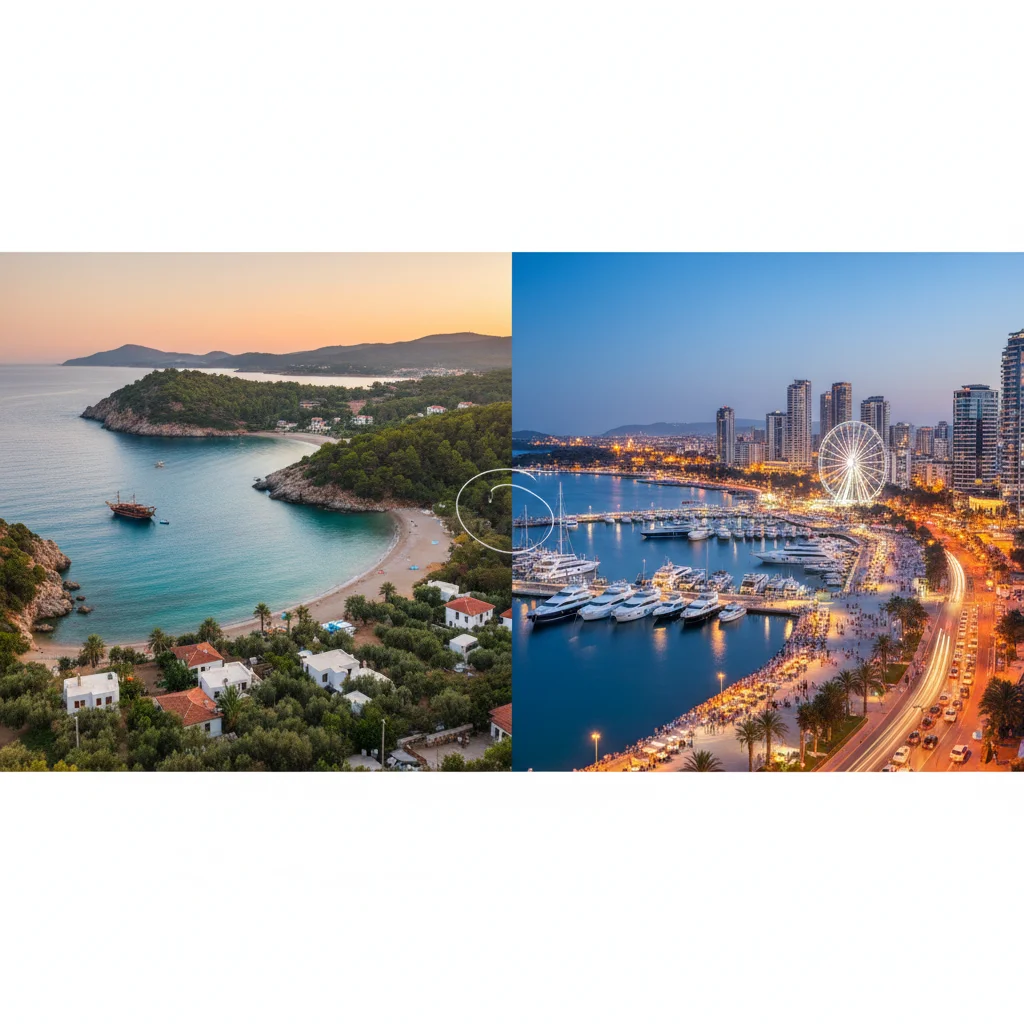
Location selection dictates both occupancy stability and nightly rate ceilings. Successful short-term investment portfolios in Turkey tend to concentrate across distinct geographic clusters, each presenting unique seasonal patterns, guest profiles, and capital appreciation potential.
Looking for the best real estate investment opportunity in Istanbul?
We help you choose the right property based on your budget and goals
Get a Free Consultation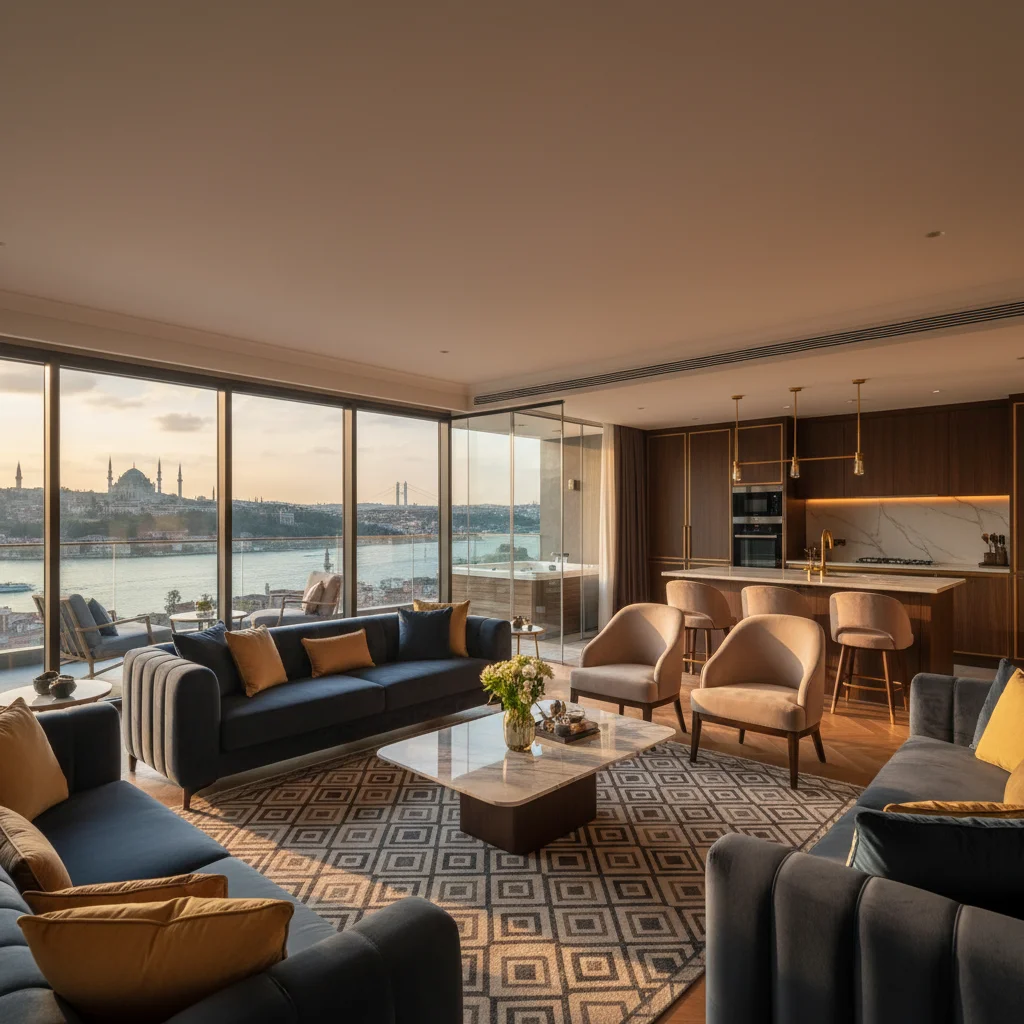
Unlike coastal seasonal markets, Istanbul offers continuous twelve-month occupancy, insulated from harsh winter slowdowns by a steady mix of business travelers, medical tourists, and urban leisure visitors.
Antalya represents Turkey's premier leisure playground, setting international arrival records year after year. The city blends pristine beaches with an established urban infrastructure, attracting both short-stay summer vacationers and winter sun-seekers from Northern and Eastern Europe.
The Bodrum peninsula attracts high-net-worth travelers, international jet-setters, and maritime yachting crowds. While the operational season is shorter (primarily running from late May through early October), the ultra-high ADRs achieved during peak months can outstrip an entire year's worth of standard urban rental income.
Key luxury locations such as Yalikavak (home to the award-winning superyacht marina), Turkbuku, and Gundogan command some of the highest hospitality rates in the Mediterranean basin. Outside peak summer, long-stay autumn and spring retreats are growing in popularity, driven by wellness tourism and remote executives seeking tranquil seaside environments.
For investors targeting family-centric travelers from the Gulf Cooperation Council (GCC) states, Bursa and Trabzon remain reliable, high-demand destinations:
Underwriting a short-term rental property in Turkey requires a clear, objective breakdown of all revenue drivers and operating expenditures. The table below illustrates a comparative financial model comparing long-term leases against professionally managed short-term holiday rentals in an upscale Istanbul residence.
| Financial Metric | Traditional Long-Term Lease | Short-Term Tourism Rental (Law 7464) |
|---|---|---|
| Property Purchase Value | $300,000 USD | $300,000 USD |
| Average Monthly / Nightly Rate | $1,250 USD / month | $110 USD / night (Average ADR) |
| Annual Occupancy Rate | 95% (Stable) | 70% (255 nights occupied) |
| Gross Annual Income | $15,000 USD | $28,050 USD |
| Operating & Platform Fees (20%) | N/A | $5,610 USD |
| Cleaning, Linen & Utilities | Paid by Tenant | $3,200 USD |
| Building Service Charge (Aidat) | Paid by Tenant | $1,200 USD |
| Net Annual Operating Income (NOI) | $14,400 USD (minus basic tax) | $18,040 USD |
| Net Yield on Investment | 4.8% | 6.01% - 8.2% (Adjusted for Seasonality) |
To maintain high guest satisfaction scores, repeat direct bookings, and "Superhost" status on digital OTAs, operators must budget for specific recurring operational overheads:
Income earned from short-term holiday accommodations in Turkey is categorized as commercial revenue rather than simple passive residential rent. Foreign and domestic investors must consider several essential tax obligations:
Acquiring real estate in Turkey tailored specifically for the short-term market requires disciplined due diligence that balances physical location appeal with regulatory compliance.
Before transferring any earnest deposits, verify the official zoning and architectural usage status recorded on the property’s Title Deed (Tapu). Properties categorized strictly as "Mesken" (Residential) in traditional apartment blocks are bound by the strict unanimous neighbor consent rules of Law No. 7464. Look instead for properties carrying mixed-use, commercial, or explicit "Turizm Tesis / Rezidans" planning designations to secure unrestricted licensing.
While Turkey has eliminated formal military clearance delays across most primary municipalities, your conveyancing lawyer must verify that the property does not sit within protected military zones or strategic border sectors. Furthermore, under Article 35 of the Land Registry Law No. 2644, foreign ownership cannot exceed 10% of the total private surface area within any given administrative district (İlçe).
Foreign buyers are legally mandated to commission an independent real estate appraisal report conducted by an SPK-licensed (Capital Markets Board) valuation expert. This valuation validates that the transaction price aligns with prevailing market conditions, safeguarding international buyers from inflated pricing schemes.
The closing takes place directly at the local Land Registry Directorate (Tapu Müdürlüğü). Upon signature, the final Title Deed is issued, transferring unencumbered freehold ownership. Immediately following title transfer, the investor must register with the local municipal tax office and set up automated municipal property tax (Emlak Vergisi) schedules.
Managing high-turnover vacation rentals across international borders is challenging without structured, on-the-ground operational support. As the Turkish market has matured, three distinct property management models have emerged:
Looking for the best real estate investment opportunity in Istanbul?
We help you choose the right property based on your budget and goals
Get a Free Consultation
Top-performing short-term operators rely on modern property technology to optimize returns. By integrating automated Channel Managers (such as Guesty, Hostaway, or PriceLabs), units sync availability across Airbnb, Booking.com, and Expedia simultaneously, preventing costly double bookings. Algorithms adjust nightly rates dynamically based on local airport arrival volumes, weather forecasts, upcoming concert dates, and local hotel occupancy trends to maximize revenue per available room (RevPAR).
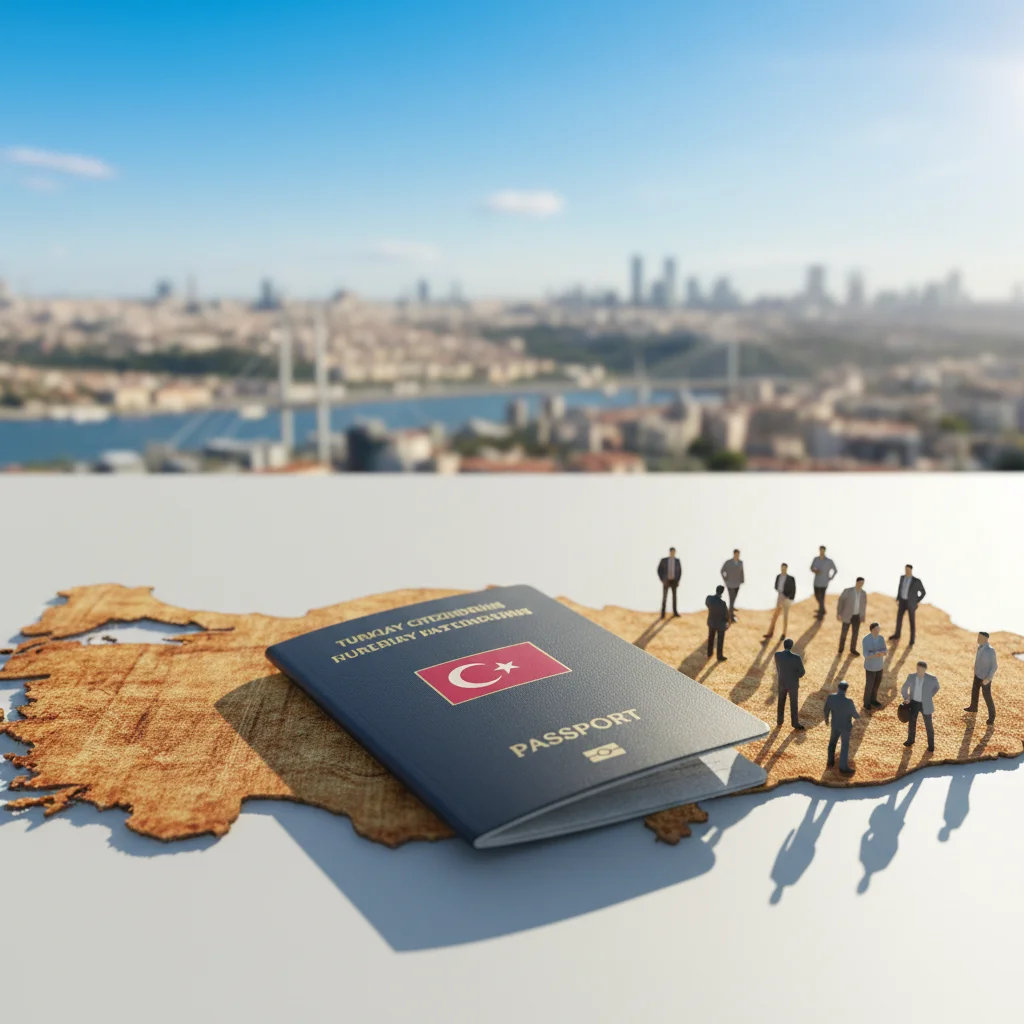
A significant advantage of investing in the Turkish real estate sector is the opportunity to combine robust income-generating assets with direct citizenship and residency privileges.
Foreign investors who acquire real estate with an aggregate value of at least $400,000 USD (or the foreign currency equivalent) qualify to apply for Turkish Citizenship by Investment for themselves, their spouse, and dependent children under the age of 18.
The legal framework allows citizenship investors to earn short-term rental yields, provided they fulfill the statutory three-year holding undertaking (Şerh). The investor signs a legally binding commitment at the Land Registry promising not to sell or liquidate the qualifying property for a minimum of 36 months. During this mandatory three-year holding window, the investor is entirely free to commercialize the asset through short-term tourism leases, earning strong foreign-currency cash flow while their Turkish passports are processed.
For investors not pursuing direct citizenship, Turkey offers a renewable real estate residence permit (İkamet İzni). Under current regulatory mandates, properties purchased for residency qualification must carry a minimum declared valuation of $200,000 USD across all major metropolitan and coastal provinces.
Investors must note an important legal nuance: while a property purchased above the $200,000 threshold grants residency rights, if the owner intends to lease that same dwelling via short-term platforms, they must obtain proper tourism licensing under Law No. 7464. If an investor uses the property exclusively for personal residency, no hospitality permit is required.
Like any high-yielding investment, short-term property investments in Turkey require proactive risk mitigation to protect operational margins and capital appreciation over the long term.
While the Turkish Lira experiences fluctuations, short-term rental assets operate with a built-in economic hedge. Because listing platforms price night stays in Euros, US Dollars, or British Pounds, foreign rental income tracks global currency benchmarks. Local operating expenses—such as on-site maintenance, domestic cleaning teams, and municipal property taxes—are paid in Turkish Lira, which can widen operational profit margins for foreign investors during periods of local currency softening.
Coastal vacation properties along the Mediterranean and Aegean experience seasonality, often seeing reduced occupancy from November through March. Sophisticated investors manage this cycle through hybrid leasing models:
Property preservation is essential when operating high-end furnished inventory. Safeguard physical investments by utilizing platforms that enforce strong multi-tiered guest verification, including confirmed government ID uploads, positive host reviews, and secure pre-authorized credit card damage deposits. Equipping units with digital noise-monitoring sensors (such as Minut) allows hosts to detect unauthorized parties without infringing on guest privacy, preventing interior property damage and neighborhood noise complaints.
Yes. Foreigners who own real estate in Turkey can legally list their properties on Airbnb, Booking.com, or any other marketing channel, provided they secure the official Tourism Residence Permit from the Ministry of Culture and Tourism pursuant to Law No. 7464 and register arriving guests via the police KBS portal.
The minimum purchase threshold is $400,000 USD. The property must be paid via formal central bank currency exchange mechanisms (Döviz Alım Belgesi) and held for at least three consecutive years.
No. Standard apartment blocks require 100% notarized consent from all title owners in the building. However, purpose-built luxury residential towers (Residans) with on-site hospitality infrastructure and pre-approved management plans are legally exempt from this unanimous consent requirement.
Short-term rentals are classified as commercial activities. Hosts must establish a tax identity in Turkey, issue invoices (E-Fatura) carrying standard statutory VAT, pay the 0.5%–1% TGA Tourism Share, and file annual commercial income tax returns based on net earnings after allowable deductions.
Operating an unpermitted short-term vacation rental carries strict administrative penalties under Law No. 7464, beginning with a 100,000 TRY fine on first detection. Continued non-compliance triggers escalated fines reaching up to 1,000,000 TRY, along with mandatory delisting and potential municipal property closure.
Short-term real estate investments in Turkey offer a compelling blend of high rental yields, portfolio diversification, and strategic immigration opportunities. While new statutory regulations have raised the compliance bar, they have also institutionalized the market, weeding out substandard operators and protecting the investments of compliant, professional landlords.
By acquiring strategically positioned properties in amenity-rich branded residences or prime tourist locations, verifying planning and zoning documentation, and executing through either dynamic tech tools or professional property management teams, investors can build resilient, foreign-currency cash-flowing real estate portfolios backed by one of the world's most enduring global tourism powerhouses.
Market insights, legal guidelines, and data projections featured in this report were gathered in collaboration with industry reference resources:
Detailed property listings and regional market intelligence via Emlak Platform.
Real estate valuation, legal consultancy, and property acquisition through Mbany Real Estate.
Citizenship by investment processing and Istanbul development portfolios via Massar Istanbul.