US Dollar - USD
- Turkish Lira - TRY
- US Dollar - USD
- Euro - EUR
- Pound sterling - GBP
- Russian Ruble - RUB
- Chinese Yuan - CNY
- Georgian lari - GEL
- Saudi Riyal - SAR
- UAE Dirham - AED
- Syrian Pound - SYP
Turkey has long occupied a strategic crossroads between Europe, Asia, and the Middle East, and in 2026 its property market continues to draw international buyers seeking tangible assets, Mediterranean lifestyles, and legal residency pathways. Whether you are evaluating an apartment overlooking the Bosphorus, a coastal villa in Antalya, or a high-yield residential unit in Ankara, understanding how real estate investment intersects with Turkish residency and citizenship laws is essential before committing capital.
Over the past few years, Turkish authorities have tightened regulatory oversight to curb speculative pricing, protect local housing affordability, and formalize short-term rental operations. For foreign investors, these reforms have created a more transparent, appraisal-driven marketplace—provided you navigate the rules correctly from day one. This guide walks through every stage of property investment, residency eligibility, citizenship by investment, purchasing mechanics, and ongoing property management in Turkey in 2026.
Unlike mature Western European markets where entry prices are high and net rental yields often hover between 2% and 3%, Turkey offers a distinctive blend of urban scale, tourism demand, and demographic momentum. With a population exceeding 85 million and a young median age, domestic housing demand remains structurally strong even when borrowing costs fluctuate.
International buyers are drawn to Turkey for several practical reasons that extend beyond lifestyle appeal:
Looking for the best real estate investment opportunity in Istanbul?
We help you choose the right property based on your budget and goals
Get a Free Consultation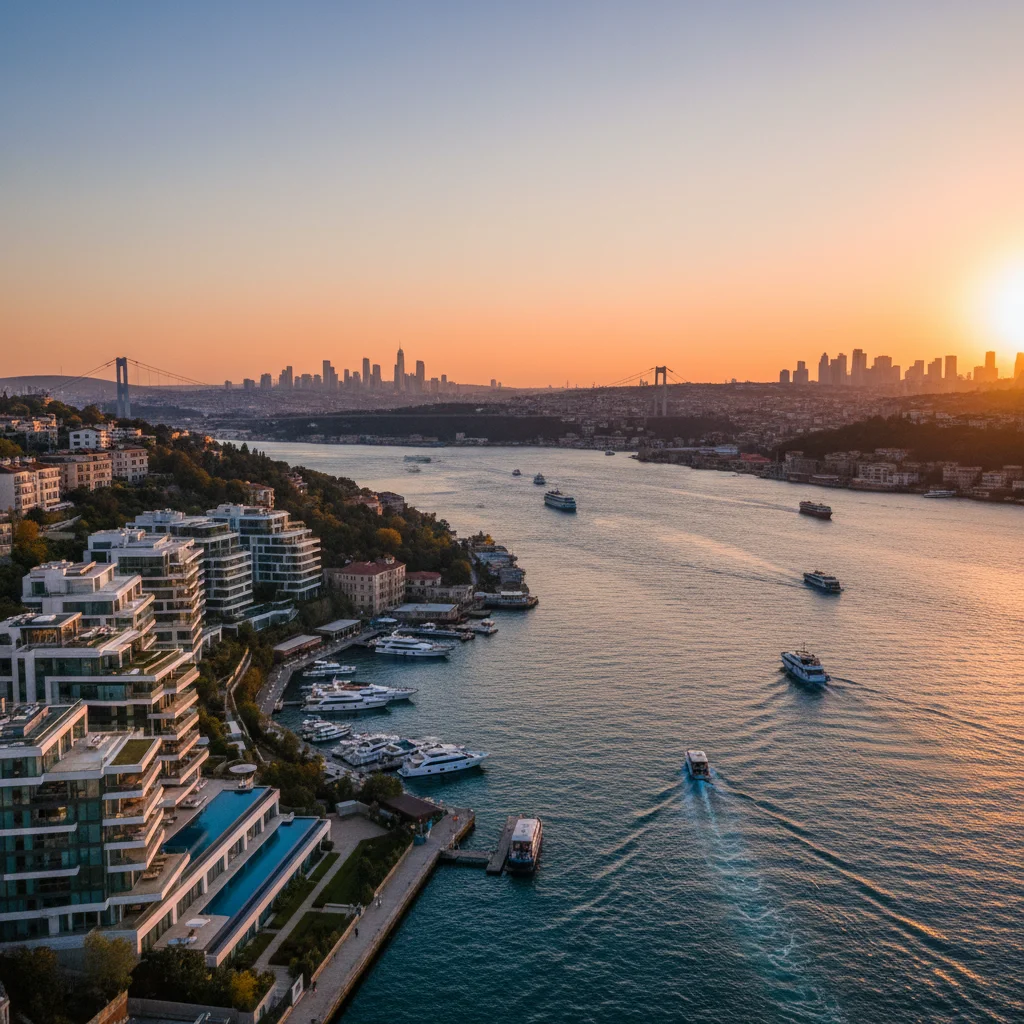
Choosing the right city in Turkey depends on whether your primary goal is capital appreciation, steady rental income, personal relocation, or qualifying for a residency or citizenship threshold. Each major market carries distinct tenant demographics, price dynamics, and liquidity profiles.
| City / Region | Primary Investor Profile | Typical Rental Demand | Key Advantage in 2026 |
|---|---|---|---|
| Istanbul (European & Anatolian Sides) | Capital growth, citizenship buyers, corporate rentals | Year-round expats, professionals, students | Highest resale liquidity and commercial depth |
| Antalya & Alanya | Lifestyle relocators, holiday-home investors | Seasonal tourists, remote workers, retirees | Strong coastal demand and resort-style complexes |
| Ankara | Conservative yield-focused investors | Civil servants, diplomats, university faculty | Lower entry prices and predictable long-term leases |
| Izmir & Aegean Coast (Bodrum, Cesme) | High-net-worth lifestyle and boutique buyers | Domestic affluent families, summer visitors | Limited prime land supply supporting long-term value |
| Bursa & Sakarya | Family-oriented buyers and industrial investors | Manufacturing workforce and Gulf vacationers | Proximity to Istanbul at significantly lower cost |
Within any Turkish metropolis, micro-location determines both rental performance and exit liquidity. In Istanbul, districts such as Besiktas, Sisli, and Kadikoy appeal to executives and affluent locals, whereas developing transit hubs in Basaksehir, Kagithane, and Kartal attract families seeking modern gated complexes with full amenities. Always verify whether a district is open for foreign residency registration before assuming a property will support an immigration application.
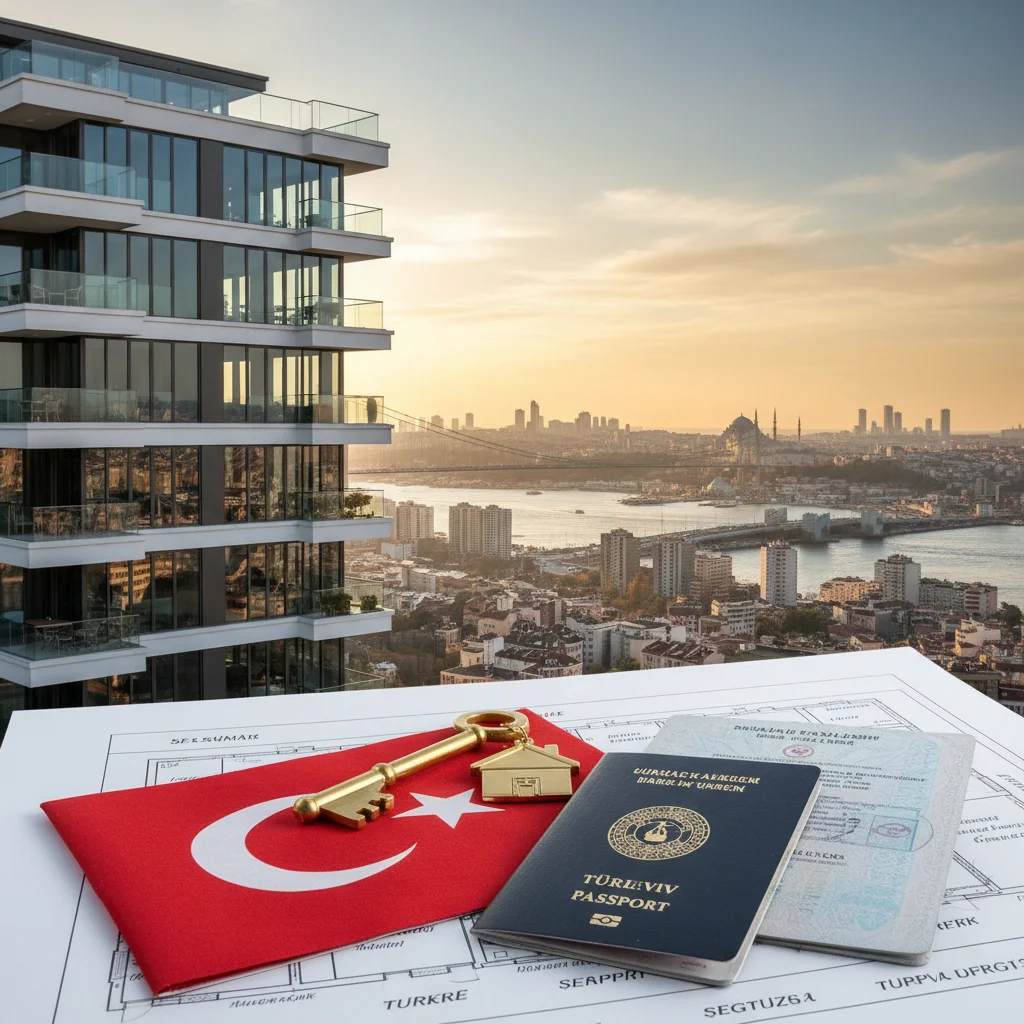
Purchasing a home in Turkey does not automatically grant the right to live in the country indefinitely; buyers must apply for a specific short-term residence permit based on immovable property ownership, commonly referred to as the tapu residence permit. Following major policy updates implemented in late 2023 and enforced throughout 2026, the financial threshold and neighborhood rules are strictly monitored by the Presidency of Migration Management (Göç İdaresi).
To qualify for a property-based residence permit in 2026, the residential property must meet a minimum appraised value of $200,000 USD. Authorities do not rely solely on the price written on a private sales contract; instead, the official title deed declared value and an independent valuation report licensed by the Capital Markets Board (SPK) must confirm that the property meets or exceeds the statutory threshold.
Property residence permits are typically issued for one to two years at a time and can be renewed continuously as long as you retain ownership of the qualifying property and maintain valid health insurance. After eight years of uninterrupted legal residence in Turkey, foreign residents may become eligible to apply for a long-term (indefinite) residence permit, provided they meet physical stay requirements and have not received social assistance.
For investors seeking permanent status, full work rights without a separate work permit, and visa-free or visa-on-arrival access to more than 110 destinations, Turkey’s Citizenship by Investment program remains one of the most competitive options globally. In 2026, the real estate investment route remains anchored at a minimum threshold of $400,000 USD.
| Feature | Property Residence Permit | Citizenship by Investment |
|---|---|---|
| Minimum Real Estate Value | $200,000 USD | $400,000 USD |
| Holding Period Requirement | Must own while holding permit | Minimum 3 years (annotated on Tapu) |
| Multiple Properties Allowed | Single residential unit required | Yes, combined total can reach $400,000+ |
| Property Type | Residential only | Residential, commercial, or land (with conditions) |
| Closed Neighborhood Impact | Blocked in closed neighborhoods | Allowed (except military security zones) |
| Right to Work Automatically | No (separate work permit needed) | Yes, full citizen rights upon approval |
| Family Coverage | Spouse and minor children | Spouse and children under 18 |
Turkish authorities enforce strict anti-fraud measures on citizenship files. Every dollar of the $400,000 investment must be verifiable through official banking channels.
Whether you are purchasing a $150,000 rental apartment or a $600,000 villa for citizenship, the legal mechanics of acquiring Turkish real estate follow a structured workflow overseen by the General Directorate of Land Registry and Cadastre (TKGM).
Before paying a reservation deposit, engage an independent real estate lawyer who has no financial ties to the developer or seller. Your legal due diligence should cover four critical checks:
Every foreign buyer needs a Turkish tax number (Vergi Kimlik Numarası). This can be generated within minutes online through the Interactive Tax Office portal or in person at a local tax office using your passport.
You will need a local bank account to execute the DAB currency conversion, pay utility bills, and receive rental income. Most major banks require your passport, Turkish tax number, proof of residential address from your home country, and occasionally a local Turkish SIM card.
Once funds are converted via the DAB and all taxes are paid, both buyer and seller—or their legal representatives holding a notarized Power of Attorney—attend the Land Registry Office appointment. If the buyer does not speak Turkish, a sworn translator registered with the notary chamber must be present to translate the deed terms verbally before signatures are finalized.
Looking for the best real estate investment opportunity in Istanbul?
We help you choose the right property based on your budget and goals
Get a Free Consultation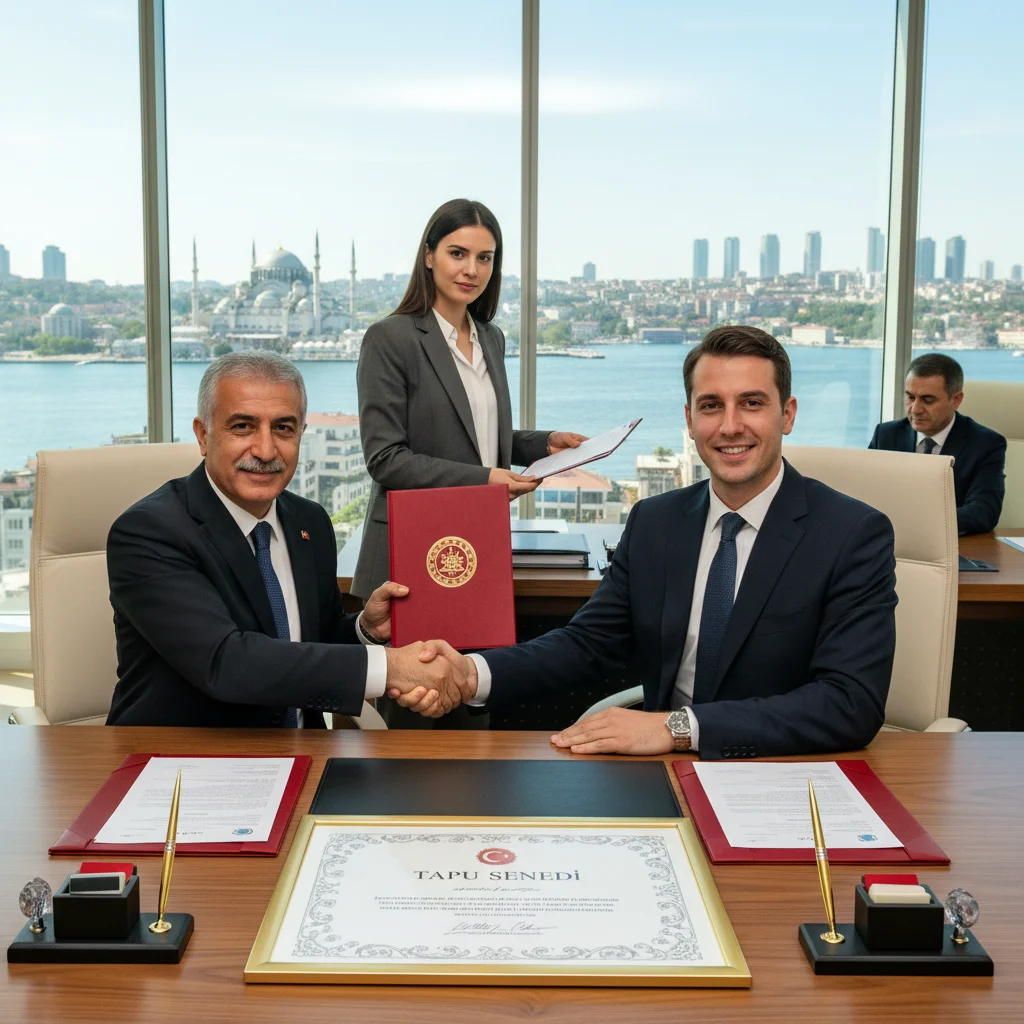
Budgeting accurately prevents last-minute surprises during closing. In Turkey, transaction fees are relatively modest compared to many European jurisdictions, especially when buyers qualify for Value Added Tax (VAT) exemptions.
| Expense Item | Typical Rate / Cost in 2026 | Who Pays / Notes |
|---|---|---|
| Title Deed Conveyance Tax (Tapu Harcı) | 4% of declared value | Legally 2% buyer / 2% seller, often negotiated to buyer |
| SPK Appraisal Report | Approx. $350 – $650 USD | Buyer (mandatory for foreign buyers) |
| Revolving Fund Fee (Döner Sermaye) | Fixed statutory fee (varies by district) | Buyer at Land Registry |
| Sworn Translator & Notary Fees | $250 – $600 USD | Buyer (higher if drafting Power of Attorney) |
| DASK Earthquake Insurance | $50 – $180 USD annually | Mandatory before Tapu transfer and utility setup |
| Real Estate Agency Commission | 2% + VAT (up to 4% total split) | Regulated cap on licensed brokers |
First-time foreign buyers purchasing brand-new residential or commercial units directly from a construction developer can apply for a full VAT exemption (saving 10% to 20% depending on the property’s classification). To qualify, the buyer must not be tax-resident in Turkey, the payment must arrive in foreign currency from abroad or via a Turkish bank account funded from abroad, and the buyer must commit to holding the property for at least three years (extended from one year under recent legislative updates). Always confirm eligibility with a certified Turkish tax advisor before signing the sales contract.
Acquiring the title deed is only half of the investment equation. Effective property management in Turkey requires navigating tenant protection statutes, strict short-term rental licensing rules, homeowners association fees, and annual tax filings.
Turkish rental law strongly favors residential tenants, making tenant screening and watertight lease drafting essential for landlords.
Turkey introduced sweeping regulations for Airbnb-style stays under Law No. 7464, transforming how coastal and urban investors operate holiday lets. Under these rules, any rental lasting fewer than 100 days at a time is classified as a tourism rental and requires a formal permit plaque from the Ministry of Culture and Tourism.
Whether your property is occupied or vacant, owners must budget for regular expenses and annual filings:
For overseas landlords who do not reside in Turkey full time, partnering with a licensed property management firm removes operational friction. A reliable manager handles utility transfers, tenant background checks, notarized eviction undertakings, routine maintenance coordination, aidat tracking, and annual tax coordination with a certified public accountant (Mali Müşavir). When interviewing management firms, insist on transparent fee structures—typically 8% to 12% of collected rent for long-term leases, or 18% to 25% for licensed short-term hospitality units—and verify that rental funds are deposited directly into your personal Turkish bank account.
Even seasoned international investors occasionally stumble in Turkey when rushing into off-market deals or relying solely on sales representatives. Keeping the following precautions in mind safeguards both your capital and your residency eligibility:
Turkey’s real estate sector in 2026 rewards informed, compliance-minded investors. While speculative quick flips and unregulated vacation rentals have been curtailed by tighter rules, genuine long-term buyers enjoy stronger consumer protections, standardized SPK valuations, transparent digital land registry records, and clearly defined residency and citizenship pathways. By pairing rigorous legal due diligence with realistic yield modeling and disciplined property management, foreign investors can turn Turkish real estate into both a resilient international asset and a gateway to long-term mobility.
Note: Information for this article was sourced from Emlak Platform, Mbany Real Estate, and Massar Istanbul.