US Dollar - USD
- Turkish Lira - TRY
- US Dollar - USD
- Euro - EUR
- Pound sterling - GBP
- Russian Ruble - RUB
- Chinese Yuan - CNY
- Georgian lari - GEL
- Saudi Riyal - SAR
- UAE Dirham - AED
- Syrian Pound - SYP
Over the past decade, Turkey has transformed from an emerging holiday-home destination into one of the world's most sought-after hubs for residency and citizenship by investment. Positioned at the crossroads of Europe, Asia, and the Middle East, the country pairs dynamic urban growth with a straightforward legal pathway to a second passport. In 2026, acquiring Turkish citizenship through buying property remains one of the fastest and most accessible real estate investment programs globally, attracting entrepreneurs, families, and portfolio diversifiers who want tangible hard-asset security alongside enhanced global mobility.
Unlike donation-based passport schemes where capital disappears into a government fund, Turkey's Citizenship by Investment (CBI) framework lets you park your capital in income-generating residential or commercial real estate. Once the mandatory three-year holding period expires, you are free to sell the asset, keep the rental returns earned along the way, and retain Turkish citizenship for life—along with your spouse and minor children. However, strict regulatory checks introduced over recent years mean that careless paperwork, unverified appraisals, or rushed developer agreements can derail an application. This guide walks you through every legal, financial, and operational detail you need to buy property safely and secure Turkish citizenship in 2026.
Launched in its modern form in 2017 and adjusted in June 2022, Turkey's real estate citizenship route allows foreign nationals to apply for naturalization by purchasing qualifying Turkish property valued at a minimum of $400,000 USD (or the equivalent in foreign currency). As of 2026, the $400,000 benchmark remains firmly in place, backed by tighter digital verification systems under the General Directorate of Land Registry and Cadastre (TKGM) and the Central Bank of the Republic of Turkey (CBRT).
Investors often assume they must spend $400,000 on a single luxury villa or penthouse. In reality, Turkish law permits considerable flexibility in structuring your portfolio, provided all properties are registered under the same investor's name and meet the three-year retention commitment:
Turkish authorities have closed several loopholes over recent years to protect market integrity and ensure genuine foreign capital inflows. Any buyer entering the market in 2026 must respect four non-negotiable compliance pillars:
| Program Requirement | 2026 Regulation | Practical Investor Note |
|---|---|---|
| Minimum Investment | $400,000 USD | Can be split across multiple eligible properties under one applicant. |
| Mandatory Holding Period | 3 Years | Enforced via an official annotation placed directly on the Title Deed (Tapu). |
| Currency & Banking | Foreign Currency via Turkish Bank | Requires official DAB certificate confirming conversion via the Central Bank. |
| Valuation Requirement | SPK-Licensed Appraisal Report | Assigned electronically through WebTapu/GABIM to prevent inflated valuations. |
| Eligible Dependents | Spouse & Children Under 18 | Adult children (18+) and parents must qualify independently or via residency. |
| Residency Requirement | None (Before or After) | No minimum physical stay in Turkey is required to keep citizenship. |
Looking for the best real estate investment opportunity in Istanbul?
We help you choose the right property based on your budget and goals
Get a Free Consultation
Evaluating a second-citizenship program solely on passport rankings misses the bigger financial picture. Investors who choose Turkey in 2026 are typically balancing three priorities: family security, geographic optionality, and hard-asset performance.
Istanbul Airport functions as one of the busiest aviation hubs on the planet, offering direct flights to Europe, the Gulf, Central Asia, Africa, and North America within a single flight leg. For business owners managing operations across multiple time zones, holding Turkish residency or citizenship eliminates recurring Schengen-adjacent transit bottlenecks and provides an immediate operational base between East and West.
Turkey permits full dual citizenship and does not require applicants to renounce their existing nationality. Once naturalization is approved, your spouse and all unmarried children under 18 receive full Turkish citizenship simultaneously. In 2026, the Turkish passport grants visa-free or visa-on-arrival access to more than 110 destinations worldwide, including Japan, South Korea, Singapore, Qatar, Hong Kong, Brazil, and most of Latin America and Southeast Asia. Furthermore, Turkish citizens enjoy streamlined access to the United States E-2 Treaty Investor Visa—a pathway frequently leveraged by entrepreneurs whose home countries lack an E-2 treaty with Washington.
Real estate in major Turkish cities has historically served as a natural inflation hedge. While interest rate cycles and domestic monetary tightening periodically cool transaction volumes, housing demand in Istanbul, Ankara, Izmir, and Antalya remains structurally supported by a young population of over 85 million people, rapid urbanization, and ongoing urban renewal projects replacing older earthquake-vulnerable buildings. Well-selected apartments in central Istanbul districts typically generate gross annual rental yields between 4.5% and 7.5% in hard-currency terms, while prime coastal properties in Antalya and Bodrum can exceed those figures during peak tourism seasons.
Completing a Turkish citizenship property acquisition cleanly requires coordination among your real estate advisor, independent Turkish lawyer, bank, and the Land Registry office. Although the process is well-structured, sequencing the paperwork correctly saves weeks of delays.
Before signing any reservation form or transferring funds, obtain a Turkish Tax Identification Number (Vergi Kimlik Numarasi). This can be issued online through the Interactive Tax Office or in person at a local tax office using your passport. Next, open a personal Turkish bank account at a reputable state or private bank. Opening an account typically requires your passport, Turkish tax number, proof of residential address from your home country (such as a utility bill), and sometimes a translated and notarized residency certificate.
Simultaneously, your legal counsel should run full due diligence on the target property at the Land Registry and the local municipality. Legal checks verify that the title deed is free of mortgages, tax liens, court injunctions, or demolition orders, and confirm that the building holds proper habitation permits (Iskan) and matches its approved architectural floor plans.
Once your offer is accepted, the buyer or legal representative submits an appraisal request through the official TKGM valuation portal. An SPK-licensed appraiser is assigned at random to inspect the property and issue an objective market value report. Because the government uses an automated assignment system, buyers cannot pressure appraisers to inflate a property's value to cross the $400,000 threshold.
With the valuation confirming at least $400,000, wire the purchase funds from your overseas account into your Turkish bank account. Instruct the bank to convert the foreign currency into Turkish Lira for a real estate citizenship purchase and issue the official DAB (Doviz Alim Belgesi). The bank then transfers the Turkish Lira directly to the seller's bank account, clearly stating the parcel number, block number, and property address in the wire description.
All parties—or their legally authorized attorneys holding a Power of Attorney—attend the Land Registry office to finalize the sale. During this appointment, the Tapu fee (officially 4% of the declared property value, though buyer and seller negotiation on splitting this cost varies by project) is paid, and the new title deed is issued in the investor's name. Crucially, your lawyer must request the registrar to place the three-year non-sale annotation (Uc Yil Satilamaz Serhi) on the title deed at the moment of transfer. This annotation locks the property for 36 months and signals eligibility for citizenship.
After the Tapu is issued with the three-year commitment, the Land Registry submits the file to the Ministry of Environment, Urbanization, and Climate Change to issue a Certificate of Conformity (Uygunluk Belgesi). This document certifies that the investment meets every legal requirement for naturalization.
Equipped with the Certificate of Conformity, the main applicant first applies for a special fast-track Investor Residence Permit (under Article 31/1-j of Law No. 6458) through the Directorate General of Migration Management. Immediately afterward, the full citizenship dossier—containing apostilled birth certificates, marriage certificates, criminal background checks (where requested), biometric photos, and family consent forms—is submitted to the Provincial Directorate of Population and Citizenship Affairs. Security screening and presidential approval typically conclude within four to eight months, after which you and your family can register biometrics and collect your Turkish ID cards and passports either in Turkey or at a Turkish consulate abroad.
| Stage | Key Milestone | Estimated Timeline | Typical Associated Cost |
|---|---|---|---|
| 1. Preparation | Tax ID, Turkish bank account, Power of Attorney | 3–7 Business Days | $150–$400 (notary & sworn translation) |
| 2. Valuation & DAB | SPK appraisal report & Central Bank currency conversion | 5–10 Business Days | $300–$500 (official appraisal fee) |
| 3. Tapu Transfer | Title deed registration & 3-year annotation | 3–5 Business Days | 4% Title Deed tax + ~$300 revolving fund fee |
| 4. Conformity & Residency | Uygunluk Belgesi & Article 31/1-j Residency Card | 3–6 Weeks | $500–$900 (residency card, insurance, fees) |
| 5. Citizenship Approval | Security vetting, decree, & passport issuance | 4–8 Months | $400–$700 per person (ID, passport, filing) |
Not every foreign buyer in 2026 intends to spend $400,000 or pursue a second passport immediately. Turkey also offers a property-based short-term residence permit, though its threshold and neighborhood restrictions differ sharply from the citizenship program. Understanding both tracks helps investors align their budget with their long-term lifestyle goals.
Foreigners who buy residential real estate for personal living purposes can apply for a renewable short-term residence permit (usually issued for one to two years at a time) if the property's official appraisal and Tapu value reach at least $200,000 USD. Unlike citizenship, this permit is strictly tied to residential properties—commercial shops or offices do not qualify—and the property cannot be located in one of the neighborhoods designated by the Migration Authority as "closed" to new foreign registrations due to high foreign resident density. Furthermore, holding a property residence permit requires you to maintain valid Turkish health insurance and renew your card periodically, and it only leads to permanent citizenship via standard naturalization after five years of nearly continuous physical residence in Turkey.
By contrast, the $400,000 Citizenship by Investment route bypasses neighborhood quota closures entirely for citizenship eligibility, accepts both residential and commercial units, imposes zero minimum physical stay requirements, and delivers irrevocable citizenship within roughly six to nine months from start to finish.
| Feature | Property Residency Permit ($200k) | Citizenship by Investment ($400k) |
|---|---|---|
| Minimum Property Value | $200,000 USD (Single residential unit) | $400,000 USD (Single or multiple units) |
| Eligible Property Types | Residential only | Residential, commercial, or mixed |
| Closed Neighborhood Restrictions | Applies (cannot register in closed mahalles) | Exempt for citizenship purposes |
| Outcome | Renewable 1–2 year residence card | Full Turkish citizenship & passport |
| Physical Presence Needed | Required for renewals & 5-yr naturalization | None |
| Right to Work Without Permit | No (requires separate work permit) | Yes (full citizen rights) |
Looking for the best real estate investment opportunity in Istanbul?
We help you choose the right property based on your budget and goals
Get a Free Consultation
Selecting the right location is what separates a smooth three-year capital preservation play from an illiquid asset that struggles to find a buyer after the holding period ends. In 2026, smart capital flows toward districts supported by infrastructure expansion, deep domestic demand, and strong resale liquidity.
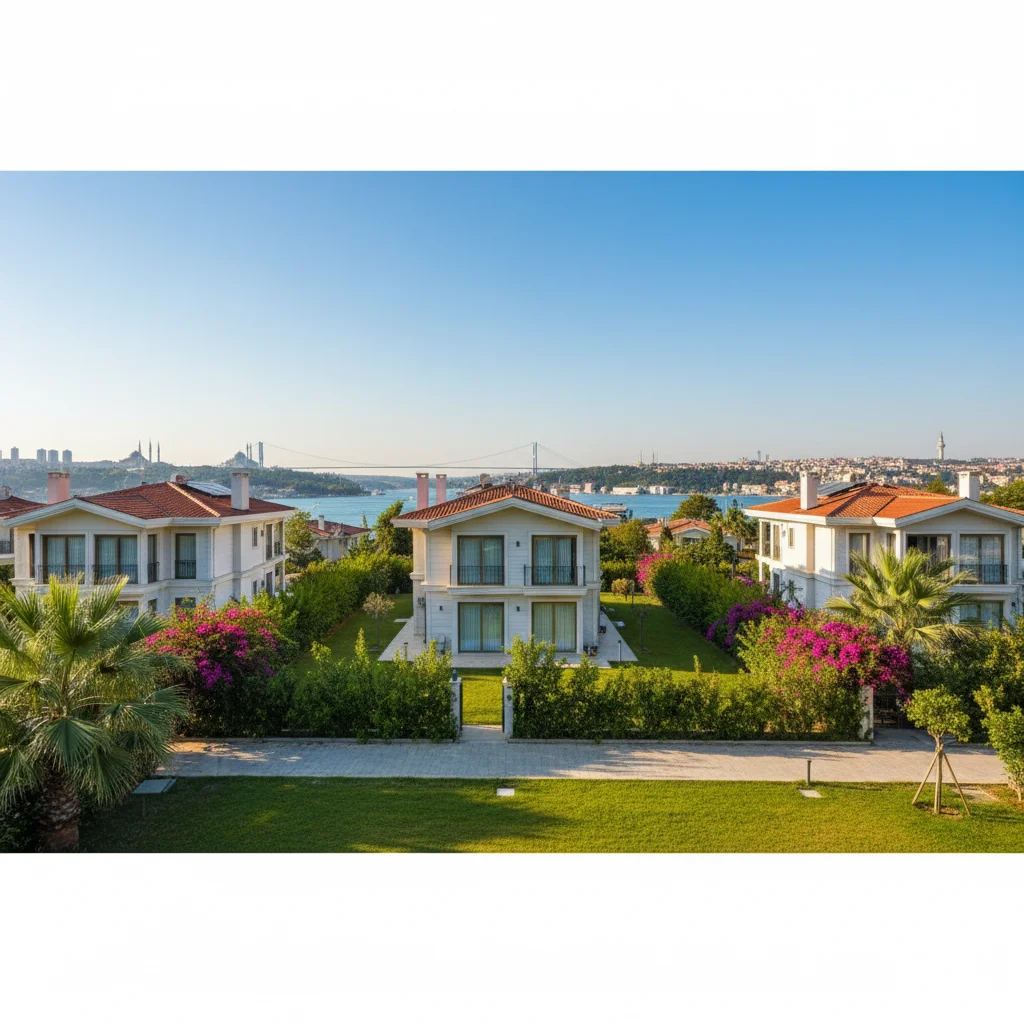
Accounting for roughly a third of Turkey's GDP, Istanbul remains the undisputed anchor for citizenship investors. Because local Turkish professionals, corporate executives, and university students form the backbone of Istanbul's rental market, properties here do not rely solely on foreign buyers when you decide to exit after year three.
Across the Bosphorus, the Asian side appeals to buyers prioritizing green spaces, lower density, and steady upper-middle-class domestic demand. Atasehir houses the Istanbul Finance Center, driving steady white-collar tenant demand for modern one- and two-bedroom residences. Kadikoy—especially along the Bagdat Avenue corridor—ranks among the most resilient luxury residential markets in the country, while neighboring Umraniye offers competitive pricing backed by expanding metro lines.
Known as the Turkish Riviera, Antalya combines Mediterranean resort living with a thriving year-round international community. Neighborhoods like Konyaalti, Lara, and Dosemealti attract European, Eastern European, and Middle Eastern buyers seeking holiday residences or furnished long-term rentals. Investors targeting Antalya in 2026 should verify municipal zoning rules carefully before banking on short-term holiday rentals, as Turkey's short-term tourism rental law (Law No. 7464) requires a Tourism Residence Permit and unanimous consent from all apartment owners in the building for stays under 100 days.
Despite clear statutory rules, foreign buyers still run into costly traps when they rely exclusively on sales agents without hiring an independent Turkish real estate attorney. Watch closely for the following red flags before transferring a single dollar:
In Turkey's domestic market, buyers and sellers sometimes declare a lower tax value at the Land Registry to reduce the 4% Tapu fee. For a citizenship investor, under-declaring the value is fatal. Both the official declared Tapu price, the SPK valuation report, and the bank DAB receipts must unambiguously show at least $400,000. Never agree to pay part of the purchase price in cash "under the table" to reach a developer's asking price if the official valuation falls short.
Always instruct your lawyer to inspect the complete historical ownership chain (Takydat and title history) at the Land Registry. If a property was owned by any non-Turkish citizen within the past three years, or if it was ever tagged with a citizenship commitment in the past, the Ministry will reject your Certificate of Conformity—even after the Tapu has already been transferred into your name.
Foreign nationals cannot purchase property inside restricted military security zones, and total foreign land ownership within any single district cannot exceed 10% of the district's private land area. Additionally, check whether the project holds a valid Iskan (Habitation Certificate). Buying a completed apartment without an Iskan can expose you to high commercial utility rates, municipal fines, or difficulty securing an SPK valuation that meets your purchase price.
Once your Turkish passport arrives, your relationship with Turkish real estate shifts from immigration compliance to active asset management. Treating your citizenship property like a disciplined investment from day one protects your net yield over the mandatory three-year hold.
If you plan to lease your property remotely, partnering with a licensed Turkish property management company simplifies tenant vetting, utility transfers, HOA (Aidat) tracking, and maintenance. For long-term residential leases (over 100 days), Turkish tenancy law strongly favors tenants regarding eviction and annual rent renewal caps tied to the 12-month average Consumer Price Index (CPI). Consequently, thorough tenant screening—verifying employment contracts, credit standing, and taking a formal notarized eviction commitment (Tahliye Taahhutnamesi) dated after lease commencement—is vital for protecting your cash flow and keeping the property easy to vacate when you decide to sell after year three.
For investors targeting short-term rentals under 100 days (such as Airbnb-style holiday lets), remember that Turkish Law No. 7464 mandates obtaining a Ministry of Culture and Tourism plaque and securing written unanimous approval from every unit owner in your building—or buying inside a designated high-rise residence explicitly licensed for short-term hospitality operations.
Turkish citizens—including naturalized CBI investors—are taxed on rental income generated in Turkey on a progressive scale (ranging from 15% to 40% after allowable expense deductions). However, you do not automatically become a Turkish tax resident simply by acquiring citizenship; tax residency generally depends on spending more than 183 days per calendar year in Turkey or maintaining your primary center of vital interests there. When it comes to your exit strategy, Turkey offers an attractive incentive on capital gains: individual property owners who hold a real estate asset for five full years from the Tapu registration date are exempt from capital gains tax upon resale. If you sell immediately after the three-year citizenship lock expires, capital gains tax applies to the inflation-adjusted profit—a crucial detail to model with your accountant before listing the property.
If you take out a mortgage or pay via developer installments, only the equity portion paid outright through verified bank transfers and backed by DAB certificates counts toward the $400,000 minimum. To qualify cleanly, your net unencumbered equity paid upfront must equal at least $400,000.
In most cases, no. By granting a specific Power of Attorney to an independent Turkish lawyer at a Turkish consulate in your home country (or during a short single visit to Istanbul), your attorney can open your tax number, finalize the Tapu transfer, obtain the Certificate of Conformity, and submit your residency and citizenship files on your behalf. You will only need to provide biometrics when collecting your final Turkish ID cards and passports, which can often be done at your nearest Turkish embassy or consulate.
Adult male applicants who acquire Turkish citizenship at age 22 or older are exempt from mandatory military service. Dependent sons who receive citizenship as minors may be subject to military service obligations upon reaching conscription age unless they reside abroad with valid dual-citizenship deferment or utilize Turkey's paid exemption option (Bedelli Askerlik).
Your $400,000 compliance is locked in on the day of your DAB currency conversion and Tapu registration. Subsequent fluctuations in the USD/TRY exchange rate do not affect your existing citizenship status or invalidate your Certificate of Conformity. When selling after three years, pricing your property in strong neighborhoods—where market values naturally adjust in line with inflation and foreign-currency benchmarks—helps safeguard your USD-denominated return.
Purchasing real estate in Turkey for citizenship remains one of the most balanced investment migration opportunities available in 2026. Unlike pure sunk-cost passport programs, a carefully selected $400,000 Turkish property portfolio puts your capital to work in a G20 economy while giving your family lifelong security, visa-free travel options, and access to global business corridors. By insisting on independent legal due diligence, verifying SPK appraisals and DAB documentation, and choosing high-liquidity districts in cities like Istanbul, Ankara, or Antalya, you can secure both a durable real estate asset and a second passport with confidence.
Note: Market insights, legal procedures, and regulatory benchmarks in this article were sourced from Emlak Platform, Mbany Real Estate, and Massar Istanbul.