US Dollar - USD
- Turkish Lira - TRY
- US Dollar - USD
- Euro - EUR
- Pound sterling - GBP
- Russian Ruble - RUB
- Chinese Yuan - CNY
- Georgian lari - GEL
- Saudi Riyal - SAR
- UAE Dirham - AED
- Syrian Pound - SYP
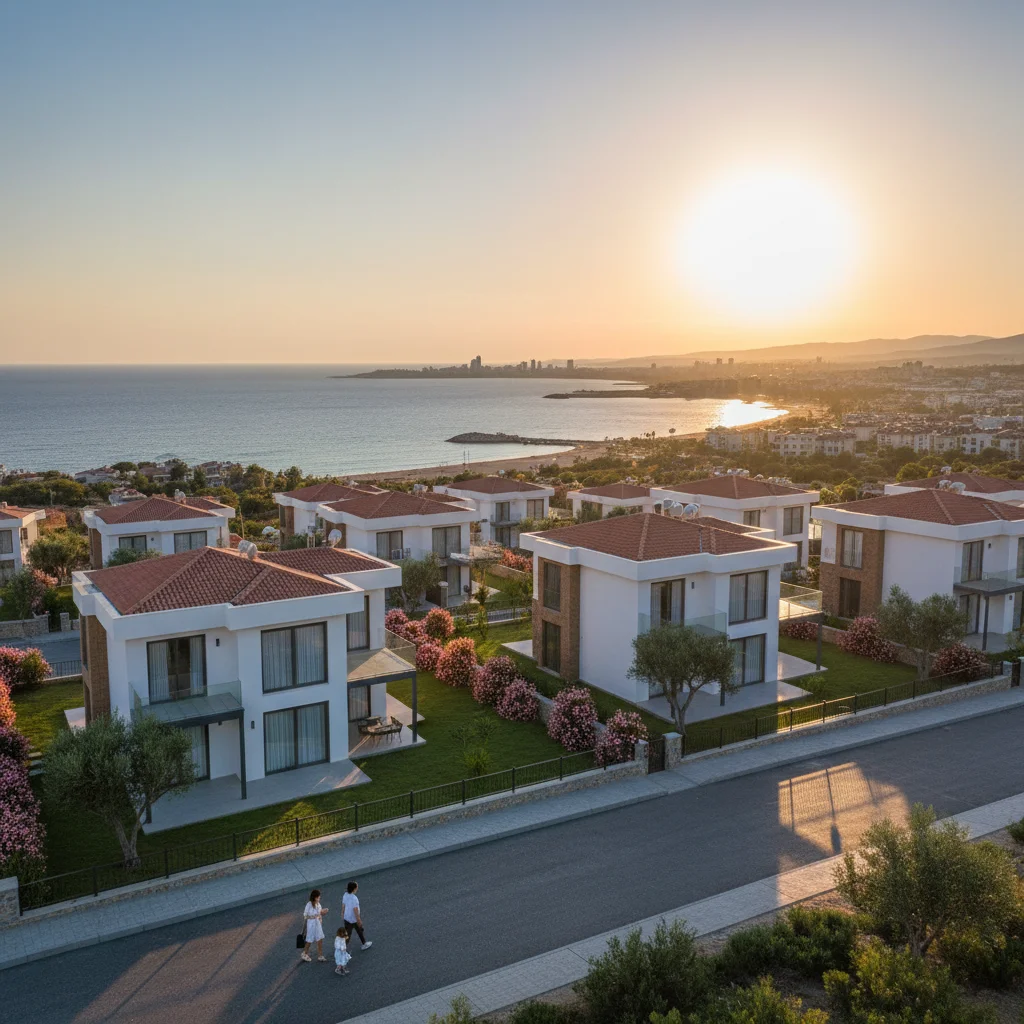
The Turkish real estate market has undergone a structural transformation over recent years. While high-rise residential towers in central Istanbul once dominated foreign demand, shifting lifestyle preferences have dramatically elevated the appeal of low-density, detached and semi-detached living. Buyers, whether seeking vacation homes, long-term family residences, or resilient portfolio diversification, increasingly prioritize private outdoor spaces, dedicated gardens, and standalone infrastructure.
However, securing an independent or semi-detached home outright can demand substantial immediate capital. This financial reality has propelled developer-backed installment programs into the spotlight. Purchasing cheap villas on installments in Turkey allows regional and international buyers to leverage off-plan pricing, spread payments over 12 to 60 months with zero percent interest, and capture significant capital appreciation before final title handover.
Navigating this niche requires an analytical approach. The term "cheap" in real estate must be balanced against quality of construction, infrastructure connectivity, municipal zoning status, and resale liquidity. By looking beyond hyper-central metropolitan cores toward well-connected peripheral zones and thriving coastal corridors, investors can secure premium lifestyle assets at entry-level valuations.
Unlike many Western markets where off-plan purchases rely on third-party banking mortgages, the Turkish real estate ecosystem heavily utilizes direct developer financing for international buyers. This system circumvents the restrictive lending criteria and high interest rates associated with commercial retail banking.
When acquiring an affordable villa under construction, payment schedules typically follow a tiered milestone model:
Installment contracts for foreign buyers are predominantly pegged to stable reserve currencies—most commonly the United States Dollar (USD) or the Euro (EUR)—to hedge against local currency volatility. While some domestic buyers contract in Turkish Lira (TL), developers offering zero-interest plans to overseas buyers almost universally fix the contract in foreign currency. Investors must account for cross-currency fluctuations between their home earning currency and the contract currency to avoid budgetary strain over the repayment lifespan.
A critical legal concern when buying on installments is securing ownership rights prior to receiving the final title deed. In standard Turkish practice, the full, unencumbered Tapu is transferred only once 100% of the property value is cleared. To safeguard the buyer’s equity throughout the repayment period, Turkish law provides the Notarized Preliminary Sales Contract (Gayrimenkul Satış Vaadi Sözleşmesi).
Executed strictly in the presence of a licensed public notary, this contract legally binds the developer to transfer the title upon full payment, defines exact project delivery dates, stipulates structural specifications, and establishes financial penalties for non-performance or construction delays. Furthermore, the contract should ideally be annotated directly onto the land registry records (Tapu Kütüğü Şerhi), preventing the developer from mortgaging, pledging, or selling the parcel to any third party.
Looking for the best real estate investment opportunity in Istanbul?
We help you choose the right property based on your budget and goals
Get a Free Consultation
Identifying affordable villas with manageable installment plans requires zooming in on emerging geographic frontiers where land acquisition costs remain low, yet public infrastructure investments are accelerating.
For investors determined to remain within the economic orbit of Turkey’s cultural and financial capital, Istanbul's outer western districts provide the highest concentration of standalone homes at manageable price points.
The southern coast of Turkey provides an optimal balance between tourism rental yields, climate appeal, and attainable villa real estate.
While the Bodrum peninsula has evolved into an ultra-luxury enclave largely inaccessible to budget-conscious buyers, adjacent Aegean coastal towns maintain attractive price-to-quality ratios.
Connected to Istanbul via the Osmangazi Bridge and high-speed ferry links, the southern Marmara basin combines thermal tourism, lush alpine nature, and highly accessible property values.
To assist cross-regional evaluation, the table below outlines typical entry points, standard financing configurations, and projected investment metrics for affordable villa developments across Turkey.
| Region / District | Average Starting Price (USD) | Typical Down Payment | Installment Duration | Estimated Gross Rental Yield | Target Investor Profile |
|---|---|---|---|---|---|
| Istanbul (Silivri / Çatalca) | $220,000 – $320,000 | 35% – 50% | 18 – 36 Months | 5.5% – 7.0% | Commuters, Capital Growth, Citizenship Bundling |
| Antalya (Döşemealtı) | $250,000 – $350,000 | 30% – 40% | 12 – 24 Months | 6.0% – 8.0% | Expat Families, Year-Round Relocation |
| Alanya / Gazipaşa | $180,000 – $260,000 | 30% – 40% | 18 – 30 Months | 7.0% – 9.0% | Holiday Home Seekers, Short-Term Tourism Rentals |
| Aegean (Didim / Kuşadası) | $160,000 – $240,000 | 30% – 50% | 12 – 24 Months | 6.5% – 8.5% | Retirees, Seasonal Leasing Investors |
| Bursa / Yalova | $190,000 – $270,000 | 35% – 50% | 12 – 36 Months | 6.0% – 7.5% | Regional Investors, Nature & Thermal Tourism Buyers |
Looking for the best real estate investment opportunity in Istanbul?
We help you choose the right property based on your budget and goals
Get a Free Consultation
The pursuit of cost-effective real estate must never compromise legal safety. Purchasing off-plan property on deferred terms requires systematic verification of both the developer's corporate standing and the project's municipal entitlements.
Before entering any contract, buyers or their independent legal representatives must review the land registry records. In rural or peripheral areas, developers may attempt to build on agricultural land (Tarla) that lacks official residential development permits (Konut İmarlı). Building a villa on unzoned or inappropriately zoned land leads to construction halt orders, substantial municipal fines, and the impossibility of obtaining an individual residential title deed (Kat Mülkiyeti).
A legitimate project must hold a valid Building Permit (Yapı Ruhsatı) issued by the local municipality. This document confirms that the architectural, structural, fire safety, and electrical plans meet state building codes. Never transfer a down payment based purely on marketing brochures or 3D renderings without verifying that the construction license has been formally granted.
It is vital to confirm that the underlying master parcel of land is clear of developer bank debt, tax liens, or legal disputes. If a developer uses the project land as collateral for corporate loans, individual buyers risk becoming subordinate creditors should the developer face financial insolvency. A thorough title search conducted through the Land Registry Directorate (Tapu ve Kadastro Genel Müdürlüğü) exposes any existing liens.
Upon physical completion of the villa complex, the municipality conducts inspections to issue the Building Use Permit (Yapı Kullanma İzin Belgesi / İskan). The İskan transitions the property from construction status (Kat İrtifakı) to fully certified residential private property (Kat Mülkiyeti). Contracts must explicitly state that the developer is financially and legally responsible for securing the İskan prior to final settlement.
Real estate acquisitions in Turkey intersect directly with immigration and naturalization rights. Investors seeking cheap villas often align their purchase with residency or citizenship objectives.
Foreign property owners can obtain a renewable short-term residence permit based on property ownership. Under revised regulations, the property valuation stated on the official title deed (and supported by an SPK-licensed appraisal report) must meet the minimum legal threshold of $200,000 USD across major metropolitan provinces. Investors pursuing installment villas must ensure that:
Turkey’s prestigious Citizenship by Investment program requires a minimum real estate investment of $400,000 USD. Achieving this via cheap villas on installments involves clear legal parameters:
Owning a villa entails operational responsibilities distinct from standard apartment living. Budgeting for these recurring costs is essential when assessing overall yield and affordability.
Affordable villas generally fall into one of two configurations:
A typical annual operational budget for a medium-sized villa (3-4 bedrooms) within a residential compound includes:
Approaching the Turkish villa market via off-plan installment structures unlocks multiple strategic benefits for prudent capital allocators.
Developers routinely launch projects at "Phase 1" launch pricing to secure early liquidity and self-fund initial groundworks. As construction reaches key milestones—structural completion, brickwork, facade cladding, and landscaping—prices are methodically elevated across sequential sales phases. Buyers entering at ground level typically capture 20% to 35% nominal capital growth by the time keys are delivered, even in a stable baseline real estate market.
Zero percent interest developer financing protects buyers from compounding interest liabilities. Cash reserves can remain allocated within higher-yielding investment vehicles, sovereign bonds, or core businesses, drawing down capital only as contract installments mature.
Acquiring early in the construction lifecycle allows buyers to negotiate modifications directly with the developer’s engineering team. Flooring materials, kitchen cabinetry, bathroom sanitary ware, underfloor heating setups, and smart home automation arrays can often be tailored to personal preferences, eliminating post-handover renovation expenditures.
To eliminate operational, legal, and financial vulnerabilities when purchasing low-cost villas on installments, execute the following rigorous due diligence steps:
The forward trajectory for affordable detached real estate in Turkey is reinforced by fundamental demographic and macroeconomic drivers. Urban decentralization continues across Turkey's major cities, accelerated by the modernization of rail systems, highway corridors, and airport connections. Regions once deemed distant outposts, such as Silivri in Istanbul, Döşemealtı in Antalya, and Mudanya in Bursa, are consolidating into fully equipped suburban centers with international schools, medical complexes, and retail centers.
Concurrently, ongoing revisions to urban planning policies limit the density of detached villa permits to preserve green environments. This administrative constraint places a structural ceiling on future villa supply, protecting long-term land values. Investors who secure affordable villa parcels on multi-year installment structures today lock in historical land pricing, establishing high-equity, low-maintenance residential assets capable of delivering robust rental demand and sustainable long-term value preservation.
Market data, legal frameworks, and regulatory requirements summarized in this analysis were sourced from industry reference reports provided by Emlak Platform, regional transaction studies by Mbany Real Estate, and metropolitan development research compiled by Massar Istanbul.